



Record Demand: Fund Received 94 Proposals Totaling US$ 1.33 Billion
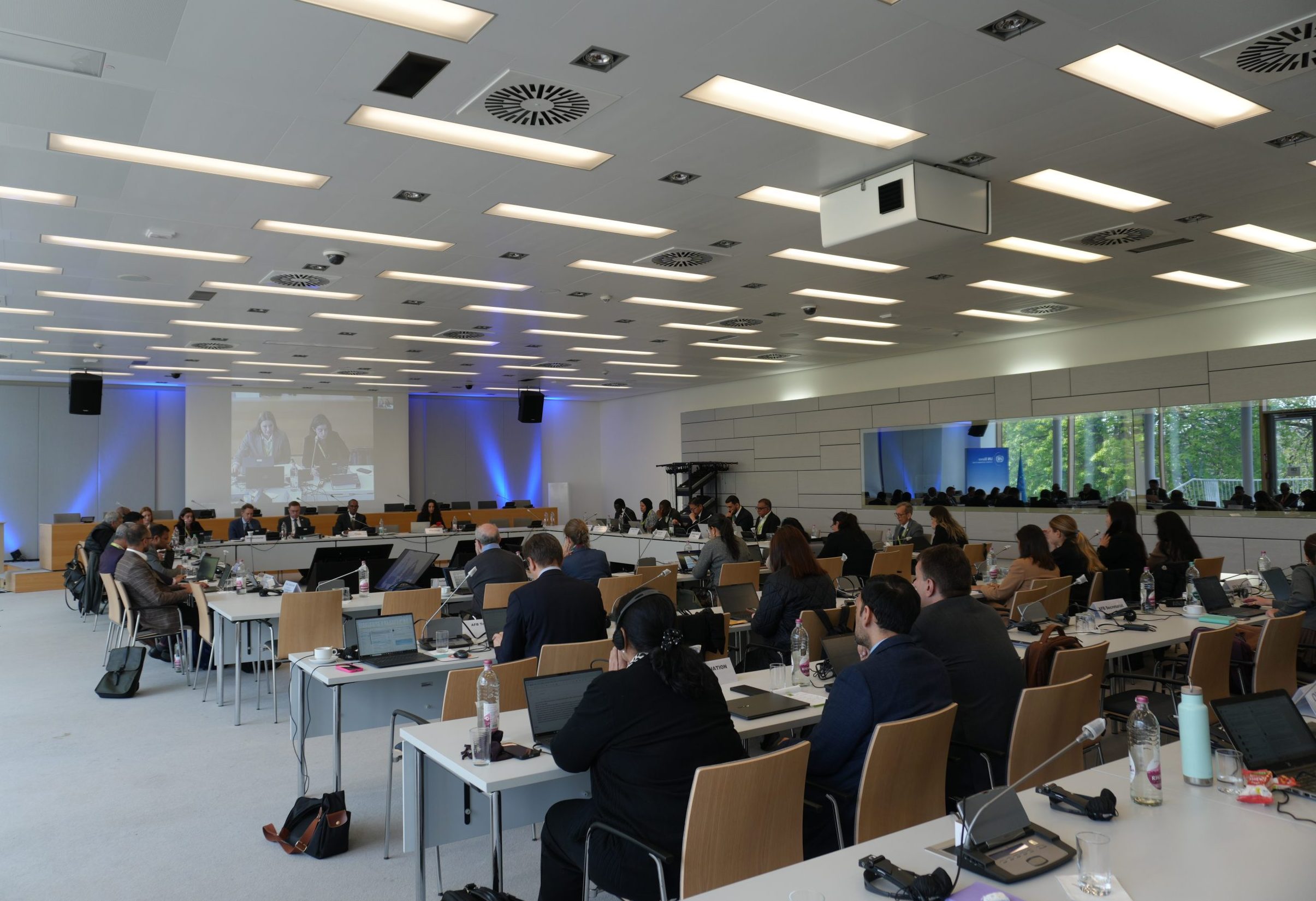
Bonn, Germany (April 10, 2026) — The Adaptation Fund Board approved US$ 133.83 million in new projects at its 46th meeting in Bonn, Germany today, as it faces record demand for its work with over US$ 1.3 billion in new proposals received.
The nearly US$ 134 million in new projects approved by the Board came close to matching its previous record of US$ 137 million in new approvals set at its meeting a year ago.
The new project approvals continue the Fund’s growth trajectory and are aligned with a pathway towards tripling outflows from UNFCCC climate funds from 2022 levels by 2030.
The Board also advanced an updated resource mobilization strategy for the Fund for the years 2026-2029 that includes several possible resource mobilization scenarios that would help strengthen the Fund’s financial sustainability, diversify its fundings sources, and ensure it can respond at scale to the rapidly growing adaptation needs of vulnerable countries.
The new project approvals included several milestones, which reflected the Board’s groundbreaking decisions made a year ago that doubled the Fund’s country funding caps from US$ 20 million to US$ 40 million, while raising caps on single-country projects from US$ 10 million to US$ 25 million and regional projects from US$ 14 million to US$ 30 million, and increasing its array of funding windows. The Board also decided to enhance access to its resources by revising the process through which organizations implementing Adaptation Fund projects are assessed.
Among the new projects approved today were the Fund’s largest single country adaptation project to date (at US$ 20 million in Malawi to help smallholders build resilience to climate change) and its largest regional project at US$ 24.55 million (in Angola and Namibia to build inclusive resilience to climate change for semi-nomadic agro-pastoral communities in the transboundary Kunene River Basin). The Board also approved the Fund’s first and largest regional Locally Led Adaptation (LLA) project at US$ 30 million to finance LLA and nature-based solutions for catchment resilience in southern Africa (in Eswatini, Zambia and Zimbabwe). First-time Fund projects were also approved in Eswatini, as part of larger regional projects, and Zambia also received its first regular single-country AF funding for a US$ 12.65 million project to adapt livelihoods to climate change through rural finance. A record 31 project formulation grants totaling US$ 4.54 million were additionally approved to support the development of proposals and project concepts valued at US$ 407 million.
Other key actions included a status update from the UNFCCC to the Board on the Fund’s transition to exclusively serve the Paris Agreement and its related monetization of 5% in proceeds from the sales of carbon credits earmarked for the Fund through the Agreement’s Article 6.4 projects (excluding LDC and SIDS projects). The Board has done preparatory work for the transition and is ready for Parties’ approval at the next COP in order for the Fund to begin receiving this new funding source. The credits have begun to be issued in the meantime, and once the Fund receives the first sale of proceeds, it will formally trigger the Paris transition.
“The Adaptation Fund continues to receive record demand for its work, and the Board responded accordingly by approving nearly US$ 134 million in new projects – which puts the Fund on track to triple outflows by 2030. It also approved the largest ever regular single-country, regional and Locally Led Adaptation regional projects in the Fund’s history,” said Mr. Ali Daud Mohamed, of Kenya, who was elected as the new Chair of the Board at the onset of the meeting. “We approved a new resource mobilization strategy which will help diversify our funding sources, and accelerate the response to the record US$ 1.3 billion adaptation demand we are facing.”
Mr. Antonio Navarra, of Italy, served as Board Chair last year. Mr. Washington Zhakata, of Zimbabwe, served as Vice-Chair. Ms. Francisca Molina, of Spain, was elected as the new Vice-Chair of the Board.
“This was a pivotal meeting for the Adaptation Fund’s growth, and the Board made several milestone decisions to help drive that growth,” said Mr. Mikko Ollikainen, Head of the Adaptation Fund. “The new project funding that the Board cleared, combined with the record amount of project funding approved last year, puts the Fund well on the way toward tripling outflows by 2030. The updated Resource Mobilization Strategy contains many new and diverse pathways to leverage both public and private sector funding, the new carbon markets, individual donations, and innovative partnerships to support that growth, as well.”
The Board also adopted a new Policy on Safeguarding against Sexual Exploitation and Abuse and Sexual Harassment (SEAH). The policy establishes a clear framework to prevent, identify, and respond to SEAH risks across the Fund’s operations, while promoting survivor‑centered, confidential, and accountable reporting and response mechanisms. Its adoption marks an important step in strengthening institutional safeguards, upholding the Fund’s core values of trust, respect, and integrity, and ensuring that adaptation finance is delivered in a manner that is safe, inclusive, and aligned with internationally recognized standards.
Projects approved by the Board included:
- Eswatini, Zambia, Zimbabwe, implemented by United Nations Development Programme, US$ 30 million (regional LLA project)
- Angola, Namibia, International Fund for Agricultural Development (IFAD), US$ 24.55 million (regular adaptation regional project)
- Malawi, Sahara and Sahel Observatory (OSS), US$ 20 million (regular adaptation single-country project)
- Zambia, IFAD, US$ 12.65 million (regular single-country project)
- Bangladesh, Nepal, World Meteorological Organization, US$ 12.09 million (regular regional project)
- Mauritania, OSS, US$ 10 million (regular single-country project)
- Nepal, World Food Programme, US$ 10 million (regular single-country project)
- Bangladesh, Palli Karma-Sahayak Foundation (PKSF), US$ 5 million (single-country LLA Direct Access project)
- Somalia, United Nations Environment Programme, US$ 5 million (large innovation project)
- 31 project formulation grants totaling US 4.53 million for various AF implementing entities to further develop diverse adaptation project concepts and pre-concepts
View photos from the 46th Adaptation Fund Board Meeting.
About the Adaptation Fund Since 2010, the Adaptation Fund has committed over US$ 1.6 billion for climate change adaptation and resilience projects and programmes, including 226 tangible, localized projects on the ground in the most vulnerable communities of developing countries around the world supporting over 65 million total beneficiaries. It also pioneered Direct Access empowering country ownership in adaptation, and operationalized other novel programmes such as Locally Led Adaptation and the Fund’s Innovation Facility.
AF Media Contact: Matthew Pueschel, mpueschel@adaptation-fund.org
Attachments
| Attachment | Type | Size |
|---|---|---|
| AFB46 Press Release_April 10, 2026 | 136 KB |