



Lesotho faces growing climate challenges, including erratic rainfall, land degradation, drought, and threats to food security and livelihoods. Through the Adaptation Fund-supported Improving Adaptive Capacity of Vulnerable and Food-Insecure Populations in Lesotho (IACoV) project, implemented by the World Food Programme (WFP) in partnership with national and local stakeholders, communities are responding with practical, locally led solutions. These include restoring degraded rangelands, improving water access, strengthening climate-smart agriculture, and creating new livelihood opportunities.
This video features community members who share how the project has helped them build resilience to climate change while improving their daily lives. From herders benefiting from rehabilitated grazing lands to women generating income through farming and small enterprises, beneficiaries describe how new skills, stronger local institutions, and adaptation investments are helping create more secure and prosperous futures.
Their experiences demonstrate how adaptation can deliver tangible benefits for households and communities—restoring ecosystems, strengthening food security, expanding economic opportunities, and building resilience to a changing climate.
A New Season in Thakanyane
A household story of adaptation in Lesotho
At the edge of the Ntšinyi family’s property sits an unfinished fish pond.
Liteboho Ntšinyi’s father began building it before he passed away. The family still hopes to finish it one day, believing it could provide another source of food and income alongside the crops and small businesses that already support the household.
“My father started it,” Liteboho said. “I want to finish it.”
In Thakanyane, a village in Lesotho’s Mafeteng District, changing weather patterns have made life more uncertain for farming families. Rainfall no longer arrives as predictably as it once did, making it harder to depend on agriculture alone.
For years, the Ntšinyi family balanced farming with cottage industry work such as sewing to make ends meet.
“When farming wasn’t doing well, sewing helped us continue,” Liteboho said.
As the seasons grew more uncertain, the family began looking for new ways to adapt.
Learning to Farm Differently Support came through the US$10 million IACoV (Improving Adaptive Capacity of Vulnerable and Food-Insecure Populations) project, funded by the Adaptation Fund and implemented by the World Food Programme in partnership with the Government of Lesotho. The Ntšinyi family learned climate-smart farming practices, improved the way they managed their land, and began using weather information to make planting decisions. Their experience is part of a broader effort that reached more than 1.4 million people across Lesotho, helping communities strengthen food security, diversify livelihoods, and adapt to increasing climate risks.
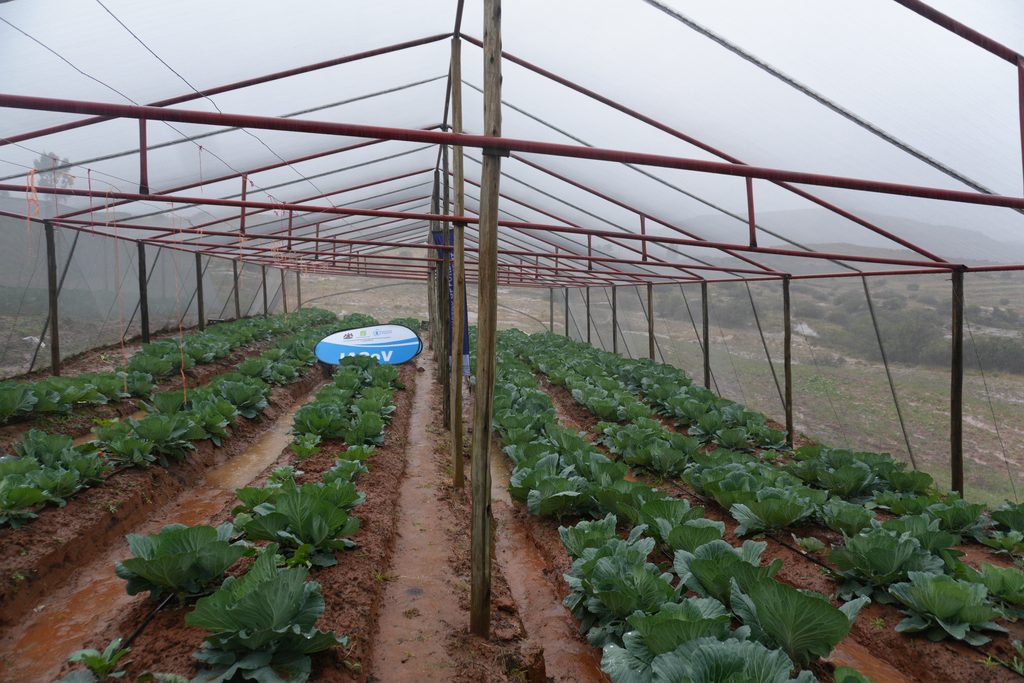
“Before, we planted in August, during the summer cropping season,” said Ms. Matumelo Ntšinyi. “Now we rely on seasonal forecasts to make informed decisions before we go into cropping season, they help us in terms of what to plant and when to plant.”
The project also provided shade net structures to protect vegetables from intense heat, strong winds, and heavy rain.
“The crops under the nets are healthier and more resilient,” Liteboho said. “They grow better, and we harvest more than we used to.”
Today, the family grows a wider variety of vegetables, both for household consumption and for local markets. More reliable harvests mean more food for the family and extra income from selling the produce. A small fruit orchard, also introduced through the project, has added another source of support—some fruit is eaten fresh, some is sold, and some is preserved for later.
Growing More Than Food
The changes didn’t stop there.
Like many families in the area, the Ntšinyis once relied mainly on maize and sorghum. Through community nutrition clubs, they began thinking differently about the food they eat.
“We realized we were growing food, but not always eating a variety of it,” Ms. Ntšinyi said.
Vegetables and legumes gradually became regular parts of family meals.
“For the children, you can see the difference,” she said. “Our meals are more nutritious and balanced now.”
The clubs also gave families a chance to share recipes, food preservation techniques, and ideas for preparing healthier meals using crops they already grew.
New Skills, New Opportunities
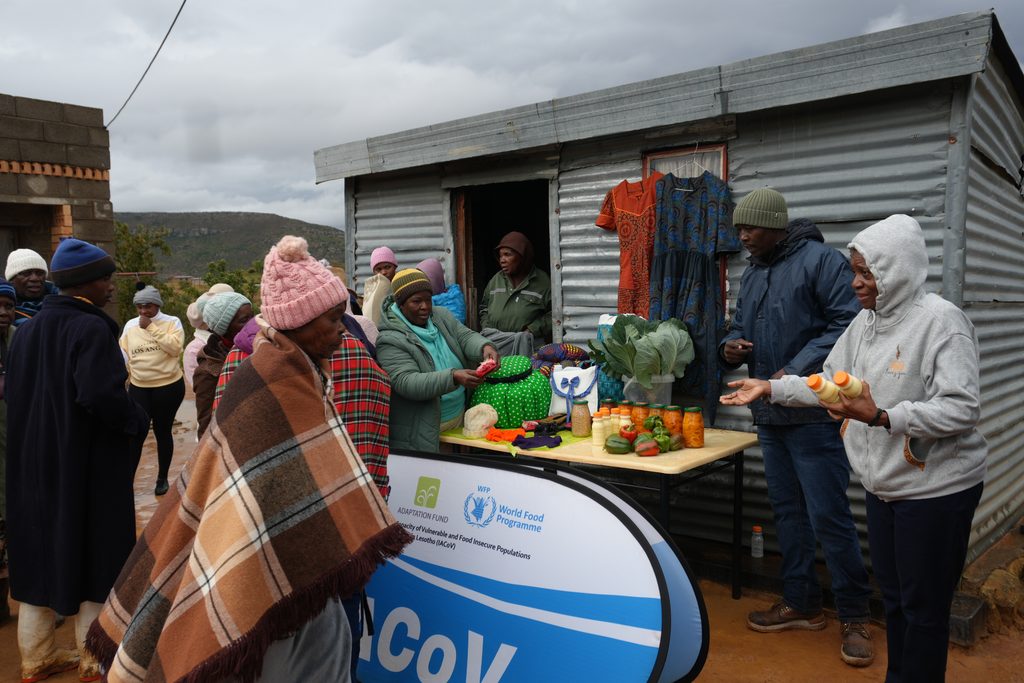
Sewing, meanwhile, continued to grow into something bigger. What began with a single machine—mending clothes and making school uniforms—became a small business providing dressmaking and repair services for the wider community. With support from the project, the family received two additional sewing machines, allowing them to take on more work and generate additional income.
The family also shared those skills with others. Ms. Ntšinyi started a sewing club for young women and girls in the community, helping participants learn practical skills that could support future employment.
“At first, we were only making school uniforms,” one club participant said. “Now I have skills that could help me find work after school.”
After the passing of the household head, the sewing club was temporarily suspended. Even so, several participants continued sewing independently, using the skills they had learned.
The family found other ways to share what they knew, too. After learning to use fuel-efficient wonder cookers through the project , they taught the method to their neighbors.
“After learning this method, we went on to train 15 people from the community],” Ms. Ntšinyi said.
Building a More Secure Future
Not every challenge has been solved. Pests still affect fruit and vegetable production, and reliable buyers are not always easy to find.
“Sometimes buyers come, sometimes they don’t,” Liteboho said. “And sometimes you have produce, but no one to buy it.”
The success of IACoV has created an opportunity to build on what communities have already achieved. Building on the project’s results, the Government of Lesotho sought to extend the approach through a second phase, which could allow more communities and families to benefit from the support that has helped the Ntšinyis strengthen their livelihoods and adapt to a changing climate. The next phase will focus on improving market access, business skills, and food processing, helping more families turn climate-resilient practices into more secure livelihoods.
The Ntšinyi family’s experience reflects broader changes across project communities. Through IACoV, more than 28,000 households gained more secure livelihood assets and climate-resilient income opportunities, while over 62,000 hectares of land were protected, rehabilitated, or restored. Food security also improved significantly, with households reporting more diverse diets and better access to nutritious food. Across project communities, the proportion of households applying adaptation measures increased from 30 percent at the start of the project to 98 percent by completion.
For now, the Ntšinyi family measures progress in what has already changed: stronger vegetables growing under the shade nets, fruit trees beginning to bear, a sewing business that helps support the household, and skills that have spread beyond their own home and into the wider community.
The fish pond remains unfinished for now. But much has already changed around it. Stronger harvests, healthier meals, new income opportunities, and greater confidence in facing an uncertain climate have helped the family build resilience one season at a time.
Like thousands of households across Lesotho supported through IACoV, the Ntšinyis are creating new pathways toward a more secure future. For them, adaptation is not a single intervention or a finished project. It is the gradual building of resilience, opportunity, and hope, one season at a time.