

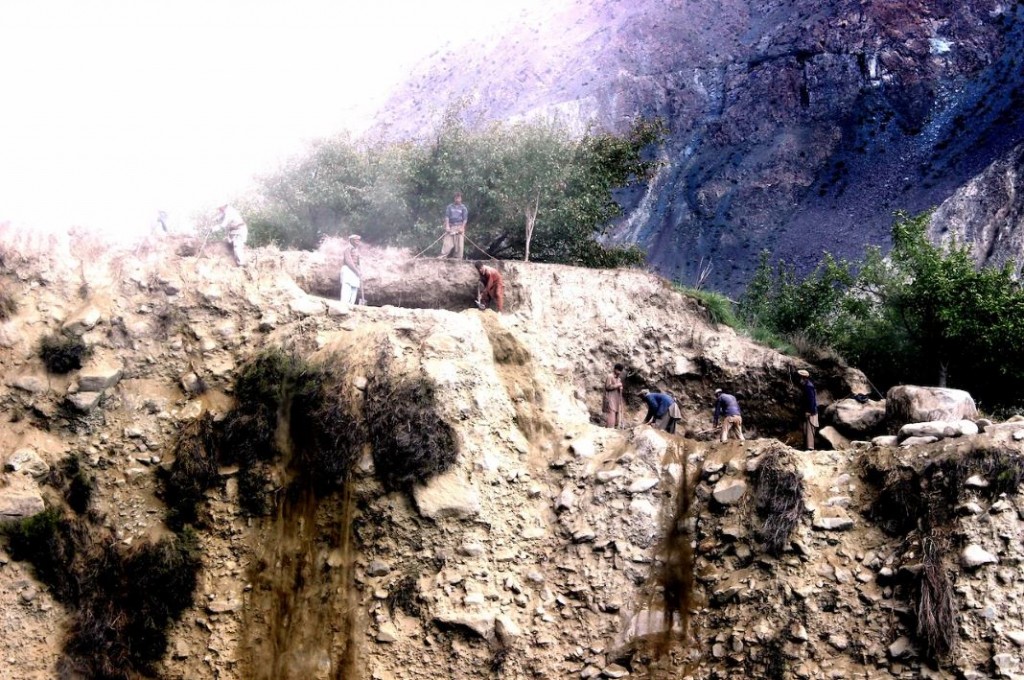
Deforestation has been a persistent problem with a variety of causes in Pakistan, including settlement expansion, agro-industrial expansion, use of wood for domestic fuel, logging and forest fires. Meanwhile glacial melt and retreat and the rise of the permanent snow line causes increased run-off, which is more difficult to retain due to deforestation.
The main objective of the proposed project is to “enhance community, local and national-level urban climate change resilience to water scarcity, caused by floods and droughts in Rawalpindi and Nowshera cities.”
This will be achieved through the following proposed sub-objectives:
- Community level: Enhance community and household level flood resilient water harvesting facilities (using innovative techniques) and strengthen capacities to plan, construct, operate, maintain and replicate these.
- District / City level: Enhance city and district-level water harvesting facilities in public buildings and on water storages in public gardens, develop district / city-level spatial strategies as tool to assess climate change related floods, droughts and water scarcity to plan for and manage climate change risks and to strengthen capacities to plan, construct, operate, maintain and replicate water harvesting facilities in public buildings and gardens.
- National and Provincial level: Strengthen national and provincial-level capacity to guide / direct city-level development considering climate change and disaster risks and impacts, especially water scarcity caused by floods and droughts.
| Project Component 1: Community level – Enhance community- and household-level flood resilient water harvesting facilities (using innovative techniques) and to strengthen capacities to plan, construct, operate, maintain and replicate these. | USD 2,800,000 |
| Project Component 2: District / City level- Enhance city and district-level water harvesting facilities in public buildings and on water storages in public gardens, develop district / city-level spatial strategies as tool to assess climate change related floods, droughts and water scarcity to plan for and manage climate change risks and to strengthen capacities to plan, construct, operate, maintain and replicate water harvesting facilities in public buildings and gardens. |
USD 1,800,000 |
| Project Component 3: National and Provincial level- Strengthen national and provincial-level capacity to guide / direct city-level development considering climate change and disaster risks and impacts, especially water scarcity caused by floods and droughts. | USD 483,014 |
| Project execution cost | USD 533,576 |
| Total Project Cost | USD 5,616,590 |
| Implementing Entity Project Cycle Management Fee | USD 477,410 |
| Grant Amount | USD 6,094,000 |
Project Documents
| Attachment | Type | Size |
|---|---|---|
| Project document | - | |
| Inception Report | - | |
| PPR1 (for web) | XLSX | - |
| PPR2 (for web) | XLSX | - |
| Mid-term evaluation report | - | |
| PPR3 (for web) | - | |
| PPR4 (for web) | - | |
| Other project order | DOCX | - |
At A Glance
Country/Region:
Pakistan/Asia-Pacific
Sector:
Grant Amount:
USD 6,094,000
Transferred Amount:
USD 6,094,000
Implementing Entity:
UN-Habitat
Executing Entity:
National level:
- Ministry of Climate Change – through establishment of PMU; NDMA
- Ministry of Water Resources
Local level:
- Concerned provincial and district departments including Provincial and district disaster management authorities
- Municipal Corporation Rawalpindi and Municipal Committee/Tehsil Municipal Administration Nowshera
Community level:
- Shehersaaz NGO
- Elected representatives and officials of target Union and Neighbourhood Councils
- Community based organizations and citizen/women groups in target communities
Approval Date:
06/01/2020
Start Date:
12/22/2020
Expected Completion Date:
12/22/2023
Revised Completion Date:
12/22/2026
Duration:
3 years
Status:
Project Under Implementation