

A shared challenge for island nations
In Mauritius and Seychelles, islanders’ relationship with the ocean is paramount – rooted in a profound respect for nature that their survival and sustainability relies on. Coral reefs protect the islands’ coastlines from erosion, provide food through fisheries, sustain tourism, and carry deep cultural meaning for these coastal communities. For generations, fishing has been more than an occupation—it is a way of life, passed down through families who depend on healthy reefs to make a living and feed their families and communities.
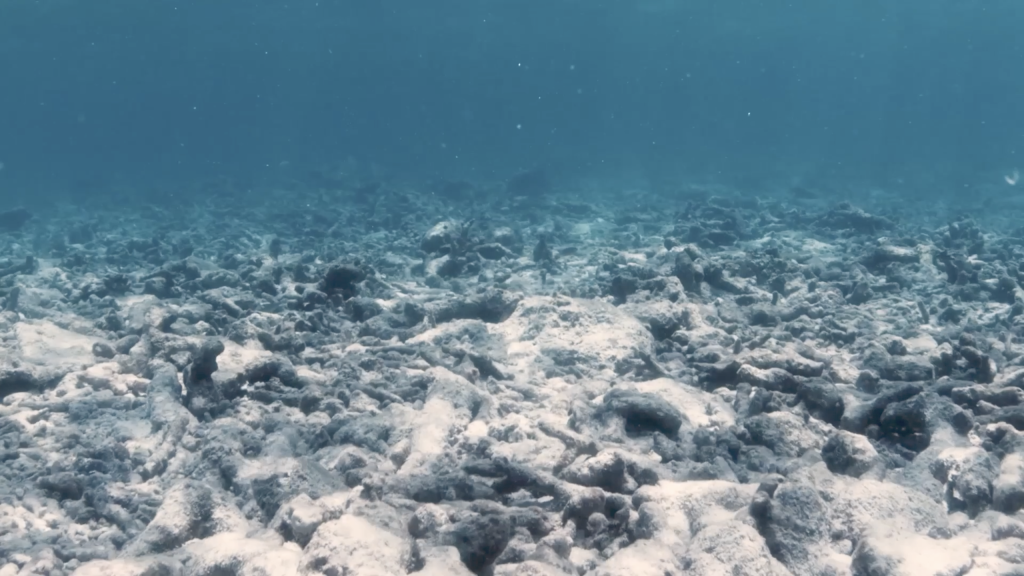
But over recent decades, that relationship has come under strain. Rising sea temperatures, repeated coral bleaching events, stronger storms, sedimentation, and human pressures have severely degraded reef ecosystems across the region.
Both small island developing states have been significantly impacted.
Fish stocks have declined; reefs that once teemed with life have turned to rubble, and many fishers have found it increasingly difficult to sustain livelihoods at sea.
In Mauritius, community members described how fishing communities have steadily shrunk, with many former fishers leaving the ocean behind to take land-based jobs as the reefs they relied on deteriorated. Thus, also eroding cultural traditions that have sustained coastal communities for generations.
According to Mr. Vinayaganidhi Munusami, Head of the Scientific Team with Eco-Sud, “Mauritius has a bit of a fisher culture for those who live on the coast, and we’re losing that… the fisher community [has been] decreasing over the years. Most people from my own family that used to work as fishers or in the marine sector, they don’t do it anymore.”
In Seychelles, where both fisheries and tourism are closely tied to reef health, coral loss has had ripple effects throughout the economy. These challenges have made clear that restoring reefs is not only an environmental priority, but also essential for economic resilience.
It is within this context that the Adaptation Fund (AF)-supported Coral Restoration Project was launched. Implemented by the United Nations Development Programme (UNDP), the project restores degraded reef ecosystems while supporting livelihoods and strengthening community stewardship across Mauritius, Seychelles and Rodrigues Island (an autonomous outer island east of Mauritius).
A hands-on community approach in restoring the reef
The reefs of Mauritius and Seychelles have experienced multiple major bleaching events in recent decades, including severe episodes in 1998, 2016, and most recently in 2024. Local project partners in both countries described how prolonged heat stress caused widespread coral mortality in a matter of months, wiping out reefs that had been a part of the region’s history for millennia. Compounding these impacts are stronger cyclones, increased rainfall and sediment runoff, human pressures such as damage caused by boat anchors and chains breaking or dislodging corals.
“Coral reefs are a lifeline for hundreds of millions of people. They act as natural buffers, protecting coastlines from waves, storm surges, and erosion; making them especially vital for Small Island Developing States and coastal communities,” said Mr. Mikko Ollikainen, Head of the Adaptation Fund.
The project addresses these challenges by combining science-based restoration with community involvement. Rather than relying on a single technique, the project applies a portfolio of adaptation approaches tailored to local conditions, recognizing that reefs, like communities, are different across islands and specific sites.
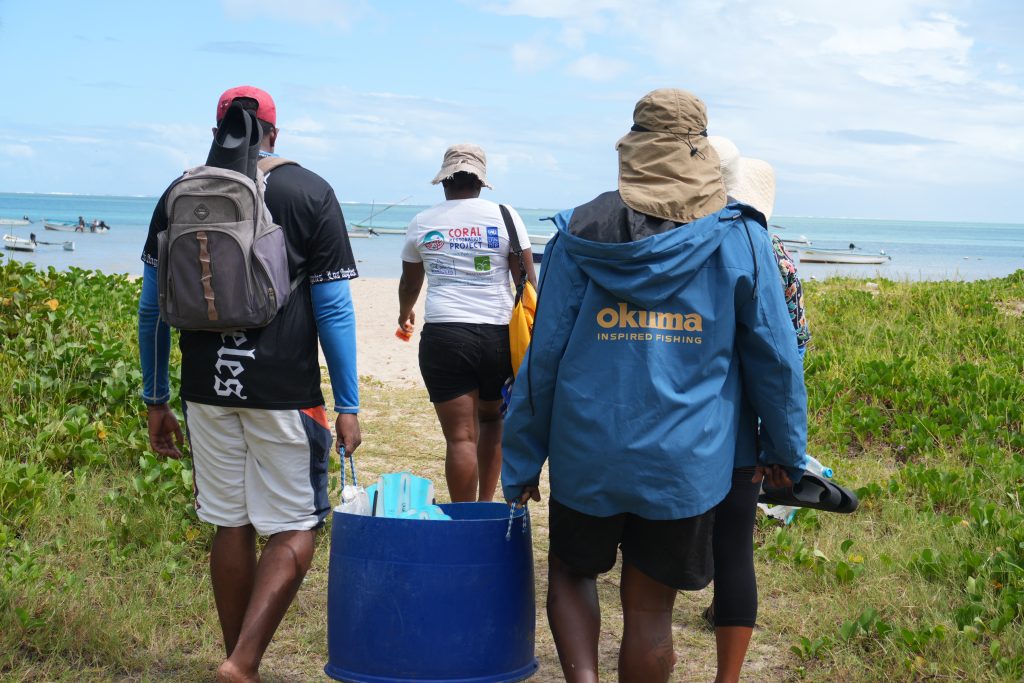
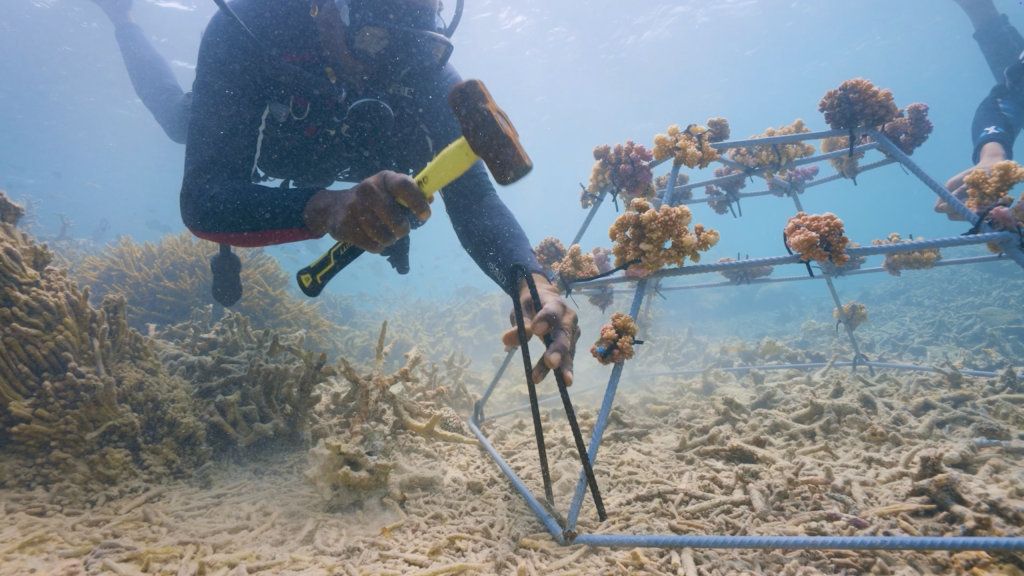
A key element of the project is participation. Former fishers, coastal residents, and young community members have been trained in coral restoration techniques, safety, swimming, snorkeling, and reef monitoring. In Mauritius in particular, local beneficiaries are involved in every stage of the process—from building coral nursery structures and deploying them at sea, to maintaining corals and out-planting them onto degraded reefs. For some former fishers, the project provides a stipend that enables them to stay connected to the ocean while contributing directly to reef recovery.
Fostering communities, culture and local partnerships
Local partners play a central role in turning restoration into a shared endeavor. In Mauritius, partners such as Reef Conservation, Eco-Sud, SHOALS Rodrigues and local NGOs work closely with coastal communities, many of whom have witnessed reef decline firsthand.
For generations, coastal communities relied heavily on their connection with the ocean, watching it change and depending on it for their livelihoods. As Ms. Melanie Ricot, Research Project Manager with Reef Conservation in Mauritius, explains, “there are people who’ve grown around the coast, who’ve seen the changes throughout the years. They are the ones who earn a living from these ecosystems… and the ones who would want to protect them more.”
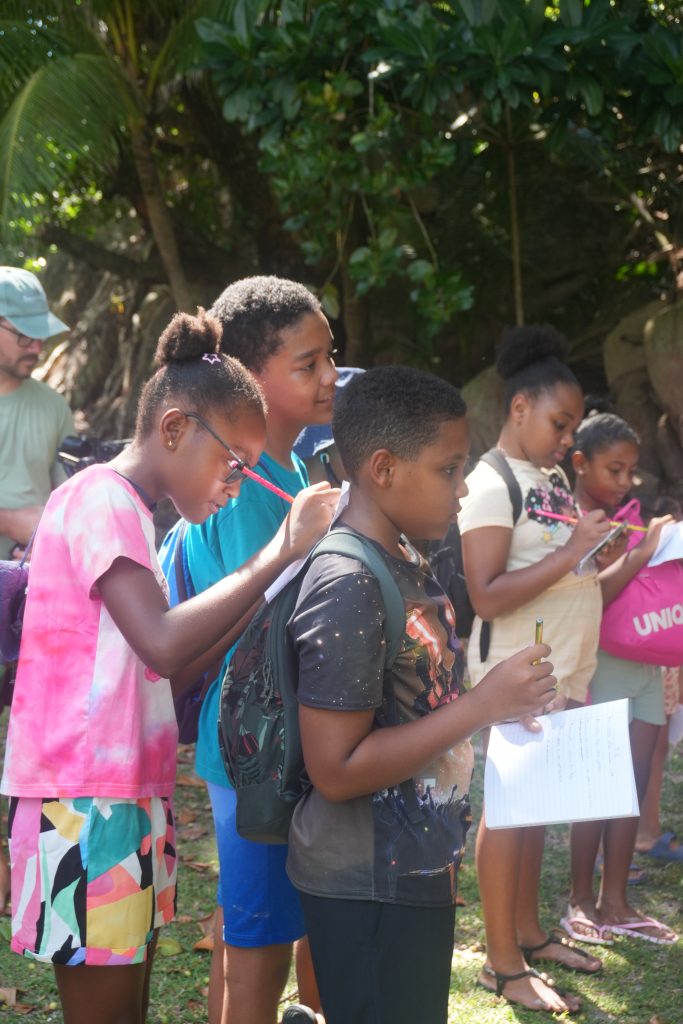
Through training, outreach events, school engagement, and site visits, communities are not only learning restoration techniques but also developing a deeper understanding of how reefs function and why protecting them matters to support marine life, shield shorelines from ocean surges, sustain livelihoods and foster tourism. For community members, seeing coral nurseries underwater and restored reef sites firsthand has been particularly powerful, helping bridge the gap between abstract climate impacts and visible solutions.
In Seychelles, partners including Nature Seychelles, Marine Conservation Society Seychelles (MCSS) and Seychelles Parks and Gardens Authority (SPGA) conduct their restoration work within marine parks such as Saint-Anne Marine National Park, Cousin Island Special Reserve and Curieuse Marine National Park, as well as plan outreach programs to engage local communities. Activities such as coral festivals, mass planting events, and collaborations with dive operators and tourism partners have helped build broad awareness. For fishers and tourism workers alike, healthier reefs translate into more fish, better snorkeling and diving experiences, and, ultimately, renewed economic opportunities.
Across both countries, the project reinforces that reef restoration is not just a technical exercise. It is about cultural heritage, shared stewardship, and empowering people who depend on the ocean to become part of its recovery.
Innovation beneath the surface
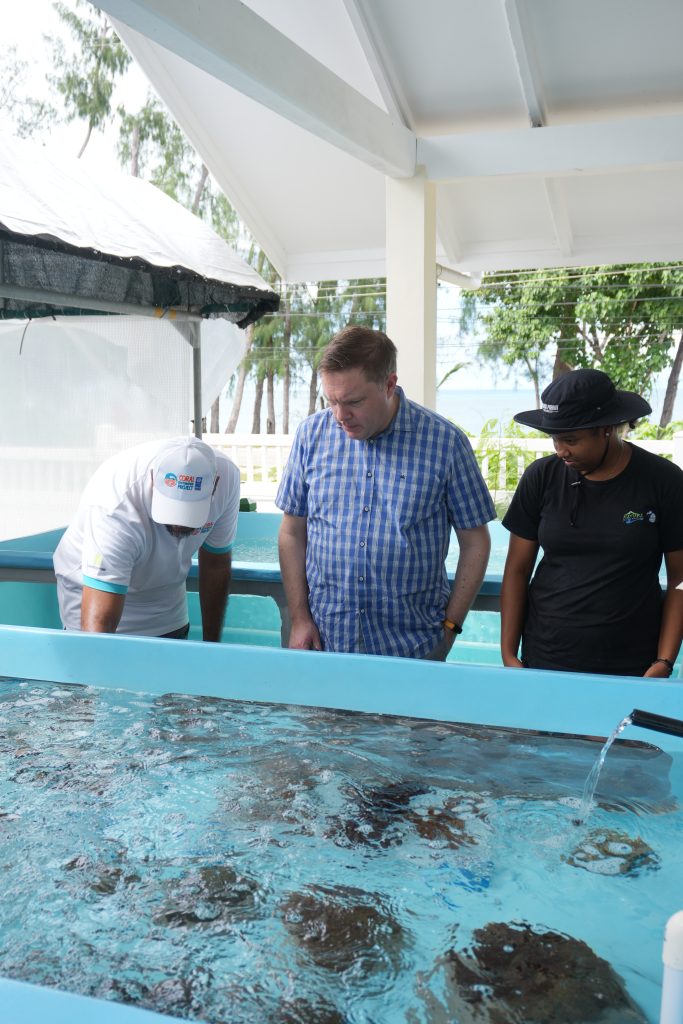
Innovation underpins the project’s approach to restoration. Drawing on years of local and regional experience, partners use both ocean-based and land-based coral nurseries, adapting techniques to site-specific conditions such as depth, water movement and exposure to storms.
One focus has been identifying and propagating heat-tolerant coral colonies—corals that survived past climate change-induced bleaching events and demonstrated resilience to higher temperatures. These corals are fragmented and grown in nurseries before being transplanted onto degraded reefs, increasing the likelihood that restored reefs can withstand future climate stress.
As Ms. Lynn Anthony, Project Assistant with Marine Conservation Society Seychelles, explained of the process, “corals are collected from a shallow site near the port, less than two meters deep. These colonies are large and long-established, which suggested they had survived past stress events, including the 2016 [major] bleaching . We selected them because they showed signs of bleaching but recovered, indicating heat tolerance. We then moved fragments to nurseries and restoration sites in deeper areas to see if they would perform similarly—and they have continued to recover both at the source site and after transplantation.”
The project uses different nursery designs including rope nurseries, tables and metal frame structures, each suited to particular coral species and environments. In Seychelles, mid-water floating nurseries allow corals to grow in deeper waters, while land-based nurseries support techniques such as micro-fragmentation and sexual reproduction, helping maintain genetic diversity. “On one nursery, we can have between 800 to 1,000 coral fragments and have out-planted 19,000 corals total… [aiming to reach] over 20,000 by the end of the project,” said Anthony.
Out-planting techniques also vary, from cementing corals directly onto reefs to using frames and natural substrates that mimic reef structure. Monitoring tools—such as photogrammetry, temperature loggers, and biodiversity surveys—help partners track survival rates, coral cover, and ecosystem recovery over time.
Together, these innovations reflect a key lesson of the project: no single method can deliver results alone. Restoring resilient reefs requires flexibility, experimentation and combining traditional ecological knowledge with cutting-edge science.
Lessons for islands beyond Mauritius and Seychelles
What makes this project particularly significant is its regional design. By linking Mauritius, Seychelles, and Rodrigues Island, the project creates space for shared learning across Small Island Developing States facing similar climate threats.
Project partners regularly exchange knowledge on coral genetics, nursery design, restoration timing after bleaching events, and monitoring methods. This collaboration has informed the development of a coral restoration toolkit, which will compile practical techniques, lessons learned, and evidence from across the region to support future restoration efforts—both within the Western Indian Ocean and beyond.
The project has shown that successful adaptation is as much about people as it is about ecosystems. Restored reefs support fish populations, protect coastlines, and strengthen tourism, but they also offer pathways for coastal communities to stay connected to the ocean in changing times. For former fishers now involved in restoration, the project represents growth rather than loss; an opportunity to transform traditional relationships with the sea into new forms of stewardship.
As climate impacts intensify, the experiences of Mauritius and Seychelles demonstrates that community-centered, innovative reef restoration can help safeguard ecosystems, economies, and cultural ties, offering valuable lessons for island nations around the world.