



Empty Buckets, Deferred Dreams
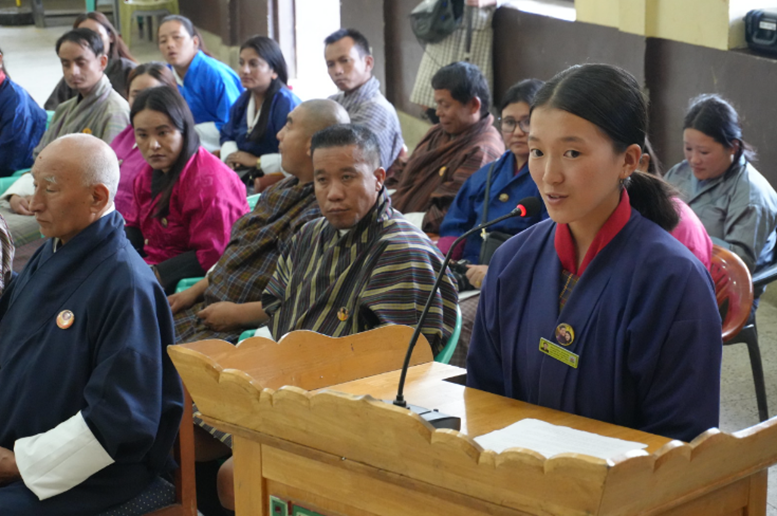
Analesha Gurung carries buckets into her classroom at Tsirangtoe School, not for science experiments or art projects, but as vessels of hope. Each morning, the tenth grader positions them beside silent taps, waiting for the moment when pipes might finally gurgle to life. Most days, her buckets remain empty.
“Students are meant to pursue excellence,” she reflects, “but instead, I chase water.”
At Tsirangtoe School in Tsirang, Bhutan, 767 students and 78 staff members share what Analesha calls her “second home.” But this home has been severely parched for years. The taps run dry without warning, sometimes for days at a time. Clothes pile up unwashed, bodies go uncleaned, and an unpleasant odor often lingers in the air. Students choose not to mention it, each knowing the others face the same reality.
A Crisis That Penetrates Deeper
For Analesha and the 200 other girls in the boarding school, the water crisis penetrates beyond daily inconvenience. Basic hygiene becomes a source of anxiety that follows her from dormitory to classroom.
“Without water, I cannot stay clean,” she explains quietly. “Sometimes the thought of skipping class crosses my mind, for I do not feel confident or comfortable sitting among others.”
Most toilets remain locked because keeping them open without water for cleaning would make the smell unbearable. Analesha has chosen to drink less, not because she isn’t thirsty, but because using toilets that can’t be flushed properly feels worse than enduring thirst.
“Knowledge is supposed to fill our minds,” she says, “but mine is often burdened by thoughts of unhygienic conditions.”
When Rain Forgot Its Schedule
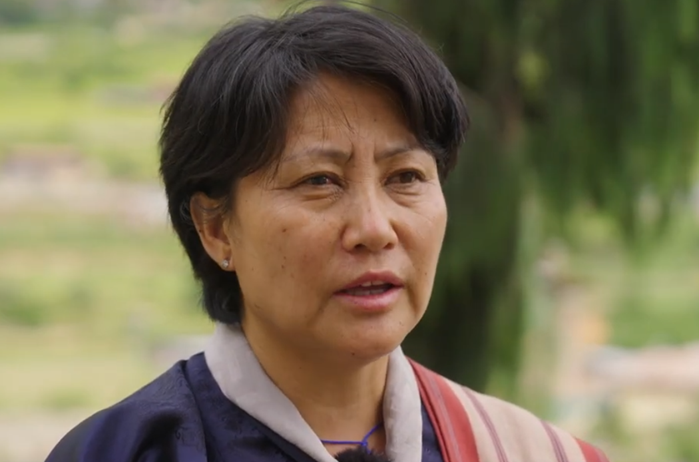
In Shaba, Paro, Sangay Lham remembers when the valley lived by a different pattern. As Gup (local leader), mother of three, and former community leader, she has watched the seasons lose their reliability. Rain once arrived exactly when farmers needed it, nurturing rice and grains so exceptional they set the standard across Paro. Shaba’s apples were sought after throughout Bhutan.
“The timing of the seasons has changed,” Sangay observes. “Rainfall has become irregular, temperatures have risen, and many of our natural water sources have either dried up or are in the process of drying.”
Of Paro’s ten sub-districts, Shaba faces the most severe water crisis, ironic given that its beautiful landscape continues to attract new residents even as water sources disappear. Before Sangay became leader, the community replaced two to three water pumps each year, caught in an exhausting cycle of summer floods washing them away and winter cold freezing them solid.
When Help Arrived
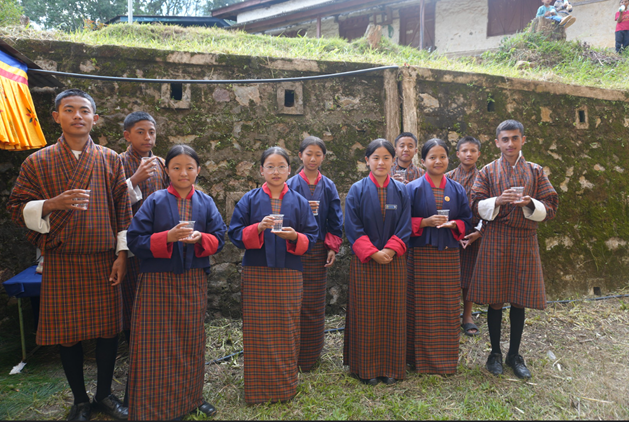
The solution that finally reached Analesha’s school and Sangay’s valley came through the Adaptation Fund, implemented by the Bhutan Trust Fund for Environmental Conservation. Over five years of tackling water scarcity in Paro, Dagana, and Tsirang, the project revealed a fundamental insight: true water security depends not just on infrastructure, but on rehabilitating the land that feeds the system.
In Sangay’s mountains of Paro, degraded watersheds were being restored to capture and hold water the way they once did naturally, with new pipelines bringing reliable water to her community . In Tsirang, at Analesha’s school, a new storage tank and filtration system would finally bring safe drinking water through 30 kilometers of pipeline, serving not just the 767 students but 4,700 people in the surrounding community. In Dagana, new irrigation channels were transforming farming, allowing households to grow rice twice a year instead of once.
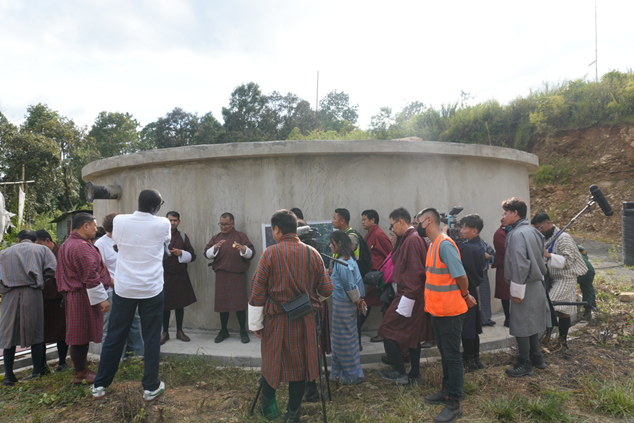
The project reached across all three districts, training government officials in climate adaptation and forming water user groups to manage local systems. To date, nearly 5,000 people have directly benefited, with the model now expanding to 60 additional communities across Bhutan.
Stewards, Not Just Recipients
Sangay understands that receiving support is only the beginning of a longer journey toward water security.
“While our immediate challenges have been addressed, the real task now is to make the system sustainable, reliable, and self-sufficient,” she emphasizes. “The responsibility to achieve this lies with each of us.”
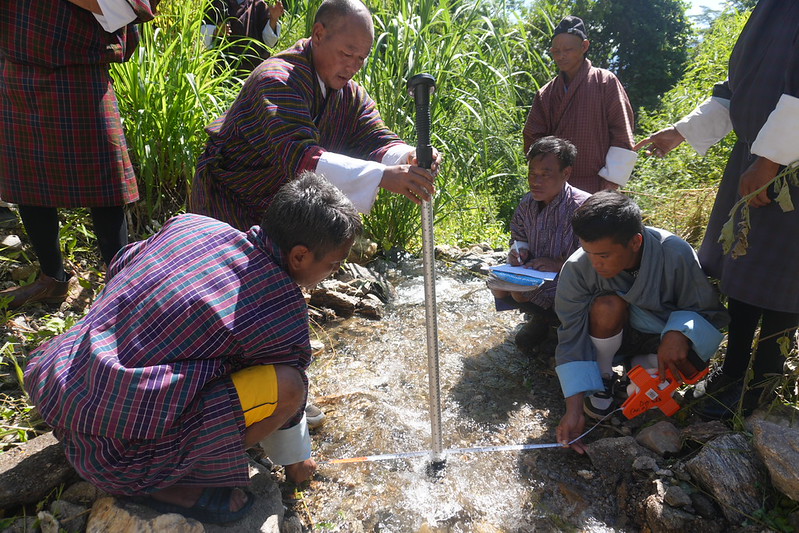
Her community has formed a Water Users Association to monitor storage levels, fix leaks, inspect pipelines, and plant trees on higher ground. In addition to technical support from the Department of Water, district administrations have now integrated operation and maintenance costs into their annual budgets.
“When pipelines pass through private land, it can be difficult,” Sangay acknowledges. “But when leaders, women, youth, and adults come together, reach a common understanding, and build collectively, it creates a strong and lasting impact.”
“To make this project sustainable in the long term, it is essential that we, as citizens, understand our individual responsibility and approach it with care and dedication, not just in words, but from the heart.”
When Water Finally Flows
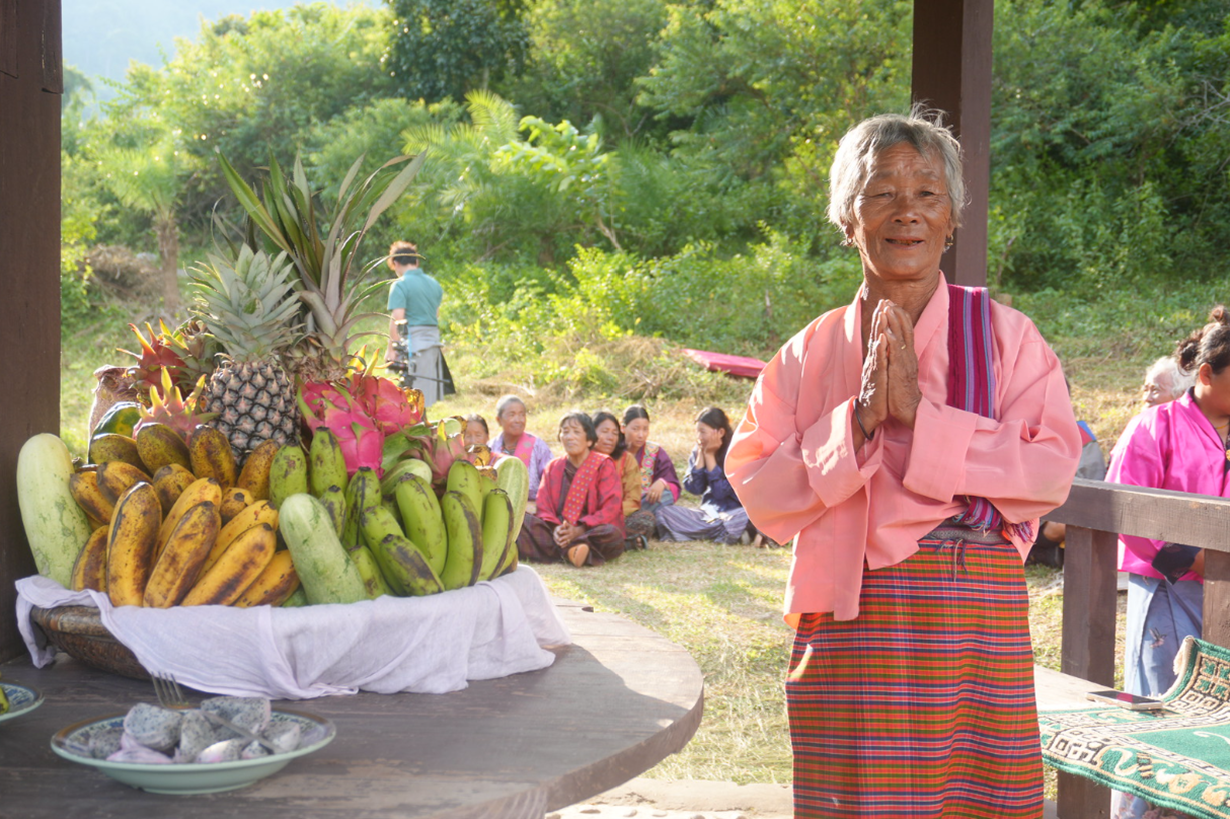
As Analesha prepares to graduate next year, she feels relief knowing her younger schoolmates will never carry the same burdens.
“My brothers and sisters will no longer have to suffer like I did,” she says. “Their minds will be free to embrace knowledge. Their worries will turn to grades. Their focus will rest solely on the pursuit of excellence.”
No more buckets carried into classrooms. No more choosing between thirst and unflushed toilets. The storage tank represents more than infrastructure—it represents basic needs finally met.
Sangay’s community in Paro now manages their own water systems. The valley has found stability again.
In Bhutan’s mountains, climate change has drained water sources that communities depended on for generations. Projects like this are helping them secure their futures again. Analesha now understands that students cannot pursue excellence without their basic needs met. It starts with something as fundamental as clean, reliable water.
See more photos of Bhutan’s community-led climate adaptation efforts in our Flickr album.