



![[WFP] Inside look: Lessons learned from the sprint journey of AFCIA startups in the MENA region](https://www.adaptation-fund.org/wp-content/uploads/2026/07/WFP_Noor.jpg)
NoorNation team with farmers in Aswan, Egypt with their newly installed solar panels and irrigation units from NoorNation. Photo: NoorNation
What AFCIA’s first cohort of startups learned from working with the WFP Innovation Accelerator and the WFP Country Offices of Jordan, Lebanon and Egypt to implement climate‑resilient solutions.
In 2024, the WFP Innovation Accelerator launched a search for startups to join the first cohort of the Adaptation Fund Climate Innovation Accelerator. With a focus on finding climate solutions in the Middle East and North Africa (MENA) region, the programme began with an in-depth Inception Workshop with the WFP Country Offices of Jordan, Lebanon and Egypt. During the workshop, the Innovation Accelerator worked closely with the WFP country office colleagues, government partners and nonprofit stakeholders to identify and define the region’s most pressing climate challenges requiring innovative solutions.
After the workshop, we opened a call for applications that attracted several high‑performing startups already implementing or ready to implement climate adaptation solutions across the region. From this pool, ten startups were selected and invited to an in‑person bootcamp in Munich, and nine of them advanced into our Spring Programme.
What is the sprint programme?
The sprint phase is when startups begin receiving equity-free funding based on their venture maturity stage. For AFCIA cohort startups, this meant direct collaboration with one of the three MENA WFP Country Offices and ongoing support to implement their solutions in real operational contexts. To strengthen their pathway to scale, WFP also organized local and regional ecosystem events, including investor roundtables. These ensured that startups had the networks, visibility and resources needed to grow beyond the programme.
The initiative marked the first time WFP implemented a programme of this design, a unique model for the world’s largest humanitarian organization working in food security. Over nine to twelve months of the sprint, each startup experienced challenges, breakthroughs and moments of learning. We asked them to reflect on their journey, because learning, iterating and emerging stronger is at the heart of innovation.
Across nine diverse startups, spanning solar irrigation, bio-fertilizers, livestock management, water harvesting and precision agriculture, a set of hard-won, cross-cutting lessons emerged:
#1: Trust is the real adoption barrier, not technology
Across almost every venture, startups found that their biggest challenge was not whether the technology worked, but whether farmers trusted it enough to use it. Teams realised that demonstrations, field visits and repeated engagement worked far better than information‑only approaches. They saw that adoption is a social and behavioural process as much as a technical one, and it cannot be achieved through a single training session or product launch.
For example, Greener Herd, a mobile app that helps livestock farmers in the MENA region manage their herds, learned that consistent, educational social media content can act as a low‑cost trust‑building tool. It allows farmers to observe results, engage at their own pace and adopt the solution when they feel ready, rather than feeling pushed toward early conversion into paying customers.
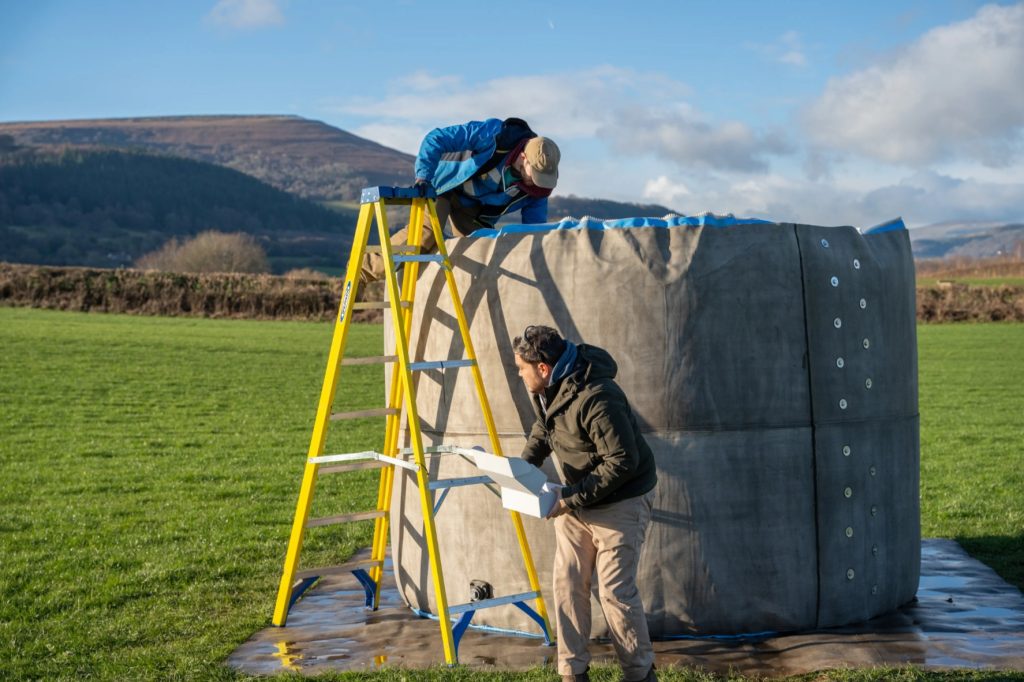
Similarly, Deploy Tech, which develops eco‑friendly, easy‑to‑transport concrete water tanks for rainwater harvesting and water management, discovered that in‑person demonstrations were far more effective than theoretical explanations. Farmers who watched a live installation, asked questions and saw the process firsthand, showed much stronger trust and interest in the solution.
#2: The product is only half the solution, systems are the other half
Several startups began their sprints with strong product validation in other contexts, but once they entered the field, they discovered operational gaps they needed to strengthen. Real‑world implementation showed that success depended not only on the technology itself but also on the systems around it, such as training protocols, quality assurance, site preparation and monitoring frameworks.
P‑Vita, a bioprocessing technology that converts Egypt’s agricultural waste, into valuable natural extracts, learned this firsthand. Working across multiple sites made it clear that Standard Operating Procedures (SOPs) and a strong Monitoring, Evaluation and Learning (MEL) framework were essential if not core needs for scale readiness. Testing the innovation in different locations made it clear that reliable implementation depends not only on the product but also on strong local operational systems.
NoorNation, which transforms traditional flood irrigation into efficient solar‑powered systems through its Solar Irrigation as a Service (SIaaS) model in Egypt, learned that quick installation alone wasn’t enough. Demonstrating results like yield improvements required a full harvest season. Their ability to define the right indicators, supported by continuous monitoring, became essential. By turning operational data into early, trustworthy evidence, they strengthened farmer and partner confidence and set the foundation for successful implementation of the solution.
#3: Institutional coordination cannot be an afterthought
Across several sprints, startups learned that engaging early with government agencies, regulatory bodies and institutional partners is essential. When coordination begins late, external timelines, approval processes or seasonal factors can create delays that are difficult to recover from. In agtech, where implementation must align with agricultural seasons, early institutional engagement becomes a practical necessity rather than an administrative step.
Adaptive Symbiotic Technologies (AST), which cultivates microbes that help crops become more climate‑resilient and reduce the need for water and fertilizer, encountered this in Jordan. As an external startup operating from outside the country, aligning with local institutions added an extra layer of complexity. This resulted in some delays, causing them to miss the natural planting window. The experience underscored how agtech innovation success depends on aligning with nature’s schedule and on early, structured collaboration with local institutions.
Responsive Drip Irrigation Manufacturing (RDI) reached a similar conclusion. Their work in Jordan showed that validation through trusted institutions is essential for commercialisation and scale‑up. As an external startup coming from outside Jordan, establishing these partnerships required additional time and coordination. Initiating collaborations later in the sprint extended their readiness timeline. Both startups now treat institutional engagement as a core workstream that begins on day one.
“Our climate capacity improved because the sprint pushed us to connect the technical performance of the solution with climate adaptation outcomes in a more structured way. Through implementation in Jordan, farmer screening, monitoring, training, stakeholder meetings, and development of the business and scale-up model, we gained a stronger understanding of climate risk, local constraints in Jordan, affordability, and how to frame and measure adaptation benefits.”, shared Hadia Elamin, Vice President of Operations RDI Irrigation.
#4: Strong partners do not just open doors, they accelerate everything
When institutional and field partnerships worked well, startups saw benefits that built on each other: faster access to communities, stronger evidence generation, higher trust from beneficiaries and a shorter path from innovation to deployment.
For example, FarmGuru by VAIS, an AI‑powered precision‑agriculture platform. The team learned that digital access alone wasn’t enough for smallholder adoption. Farmers needed confidence‑building, clear explanations, and trusted local support to turn app information into real decisions. Adoption improved only when onboarding, training and follow‑up were delivered through local coordination, workshops, and on‑ground personnel. These human‑supported structures turned simple registration into real retention and renewal, even when daily app use stayed low. These partnerships also strengthened gender inclusion. Although FarmGuru’s design was gender‑neutral, it initially didn’t reach women farmers. Irrigation and fertilisation decisions were mostly made by male household heads, and outreach channels didn’t address this. Partnerships with women‑led cooperatives and female extension workers would have created dedicated pathways for women’s participation. Future deployments now include gender‑specific onboarding targets and budgeting for female community mobilisers.
Remer,whose bio‑fertilizer Growth helps plants absorb nutrients more effectively and develop stronger roots that withstand climate shocks, found something similar. Many farmers had low literacy levels and relied heavily on traditional practices, so technical explanations alone were not enough. Adoption improved only when the team shifted to practical, visual, and demonstration‑based approaches, supported by trusted local networks. Their MoU with the Lebanese Ministry of Agriculture, which was running a national post‑conflict awareness campaign at the time, made this possible. Through field demonstrations, simple messaging, and peer‑to‑peer learning, farmers could clearly see how Growth worked, and this hands‑on, low‑literacy engagement was what finally moved them from hesitation to real uptake.
#5: Early assumptions about users, products, and processes must be stress-tested
Several startups discovered mid‑sprint that some of their early assumptions needed to be revisited, which is the nature of iterative innovation. These assumptions included who their users really were, what product format worked best in the field and how their operational systems should function. If the assumptions were tested later in the process, the cost would have been much higher than testing them from the start. This is a part of how solutions evolve: learning, adjusting and improving as real‑world data comes in.
Partners with Sun, which created an industrial solar oven system to help bakeries and food producers reduce fossil‑fuel use, experienced this directly. They began the sprint with a system based on Concentrated Solar Power (CSP) technology designed to power a single oven. Once they tested it in real conditions in Lebanon, they found the CSP design was not practical. This led them to shift to a hybrid system using PV, batteries and hydrogen, which proved more modular and effective. On‑site monitoring then revealed that the combined system had far more capacity than expected, enough to power the entire bakery, not just one oven. These improvements were possible only because the team allowed field data to challenge their initial assumptions.
Taken together, these sprint experiences show that the gap between a working technology and a working solution is rarely technical. It is usually human, institutional and operational. The startups that navigated this gap most effectively treated adoption, partnership and process design as core deliverables, not side tasks.
For future sprint collaborations between WFP country offices and innovative startups, this points to a clear design principle: build in time and resources to foster trust with farmers, early institutional engagement and deliberate stress‑testing of assumptions before deployment begins.
The strongest innovations in this cohort were not always the most technically complex. They were the ones that listened closely to what the ground reality was telling them and adapted quickly.