



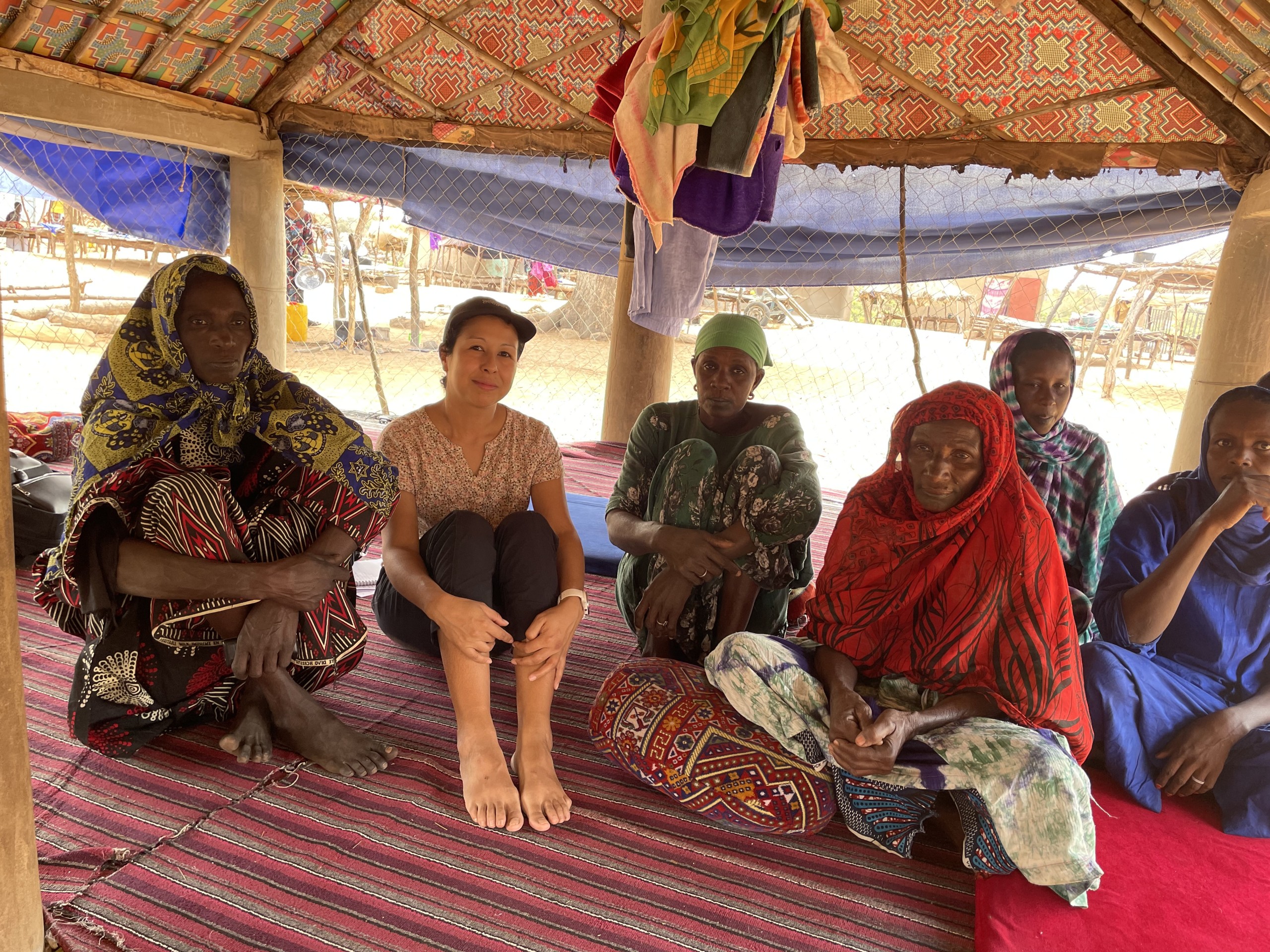
Women of the Kewalla cooperative meet with the evaluator. This group of women runs a butchershop and grows vegetables, but had to stop operating the grain mill due to frequent breakdowns. Photo Credit: AF-TERG
This blog was produced by the Adaptation Fund-Technical Evaluation Reference Group (AF-TERG).
Ex post evaluations aim to help advance learning and ultimately work on the ground for the Adaptation Fund (AF). In recent years a set of ‘ex-post evaluations’ have been conducted to examine how outcomes of AF-funded projects have been sustained three to five years after completion. Conducted by the independent Adaptation Fund Technical Evaluation Reference Group (AF-TERG), these evaluations seek to identify which key factors contributed to sustaining a project’s adaptation outcomes over time and how those characteristics help build systematic resilience.
The AF-TERG developed an innovative and targeted process for these evaluations, which includes review of project documents, evaluation of key outcomes, in-person site visits and stakeholder consultations, data collection and analysis. While they are aimed at ultimately enhancing the Fund’s work, they also carry potential to help advance learning in the wider adaptation space.
A recent case in point was the AF-TERG’s ex-post evaluation of an AF-funded project in Mauritania.
Approved in 2012 for US$ 7.8 million in grant funding, and implemented from 2014 to 2019, ‘Enhancing Resilience of Communities to the Adverse Effects of Climate Change on Food Security in Mauritania (PARSACC)’ was one of the Adaptation Fund’s earliest projects.
Mauritania had been affected by climate-related land degradation and desertification for some time, with pastoralism and agriculture identified as the economy’s most vulnerable sectors to climate change. In response, the Government of Mauritania together with the World Food Program (WFP) developed the project – which sought to address resilience to climate change and the barriers to sustainable adaptation.
Five years after project closure, the ex post evaluation reveals which project benefits have been sustained, offers insights into why some have endured, and how these outcomes are contributing to the system’s resilience.
Contributing to resilience through people, planning, and profits
Defined in the North by the Sahara, about three quarters of Mauritania’s territory is desert and only 0.4% of its land is considered arable. Despite this, almost half of Mauritania’s population and 75% of the country’s poor depend on agriculture such as rice, sorghum, dates and livestock as their primary source of livelihood. For thousands of years, pastoralists and farmers in the country have had to adapt to cope with the country’s harsh conditions. But with the acceleration of climate change and diminishing nomadic lifestyles, traditional coping strategies have no longer been sufficient.
The PARSACC project had three main aims:
- Support local governments and communities to plan for climate change. This involved the training of over 300 people from government regional technical services (DREDDs), NGOs, and the media on general concepts of climate change and food security, integrating climate change adaptation into development planning, supporting communities to develop climate change adaptation (CCA) action plans, and more.
- Fight desertification and land degradation through adaptation measures. Based on the CCA action plans developed by the communities, concrete measures were selected and installed in the project villages. These included planting trees for firewood, setting up protected community pastoral reserves, and building stone cordons to retain water.
- Help the most vulnerable with increased livelihood options. PARSACC provided training for communities aimed at generating income. This included training over 26,000 members in market gardening techniques, management of cooperatives, and planting as well as water and soil conservation techniques.
After getting to know the project and hearing from PARSACC implementing team members from the WFP and Government of Mauritania, Margarita Gonzales, Evaluation and Environment Consultant leading this ex post evaluation team, travelled to Mauritania to investigate what has happened since the project closed and what we could learn for future projects. Together with Malal Ba, an evaluator from Mauritania familiar with the country’s political, social and environmental conditions, the ex post evaluation team visited three sites that took part in the project: Kewalla, Moyasser 2, and Dionaba. Commenting on the unique opportunity this evaluation presented, Margarita explained, “In final evaluations you have to make these assumptions on what is sustainable… having the opportunity to go back to check if it happened, doing this type of (ex post) evaluation, that never really occurs…it’s a great learning opportunity for us and for the adaptation community.”
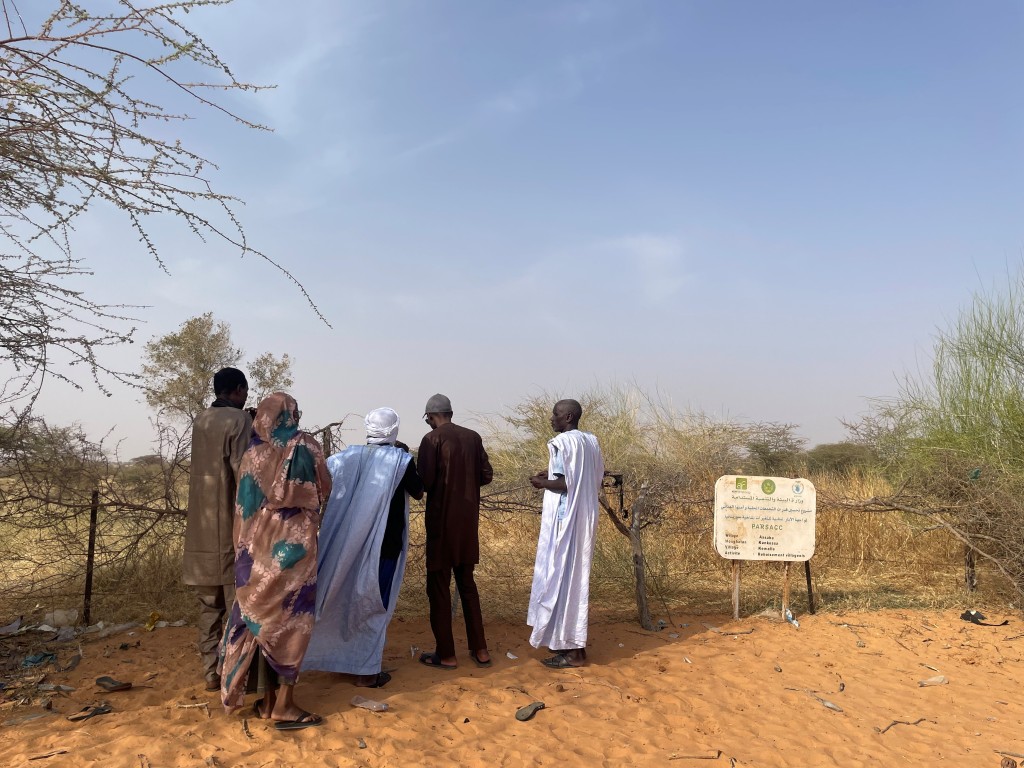
Seeing is believing
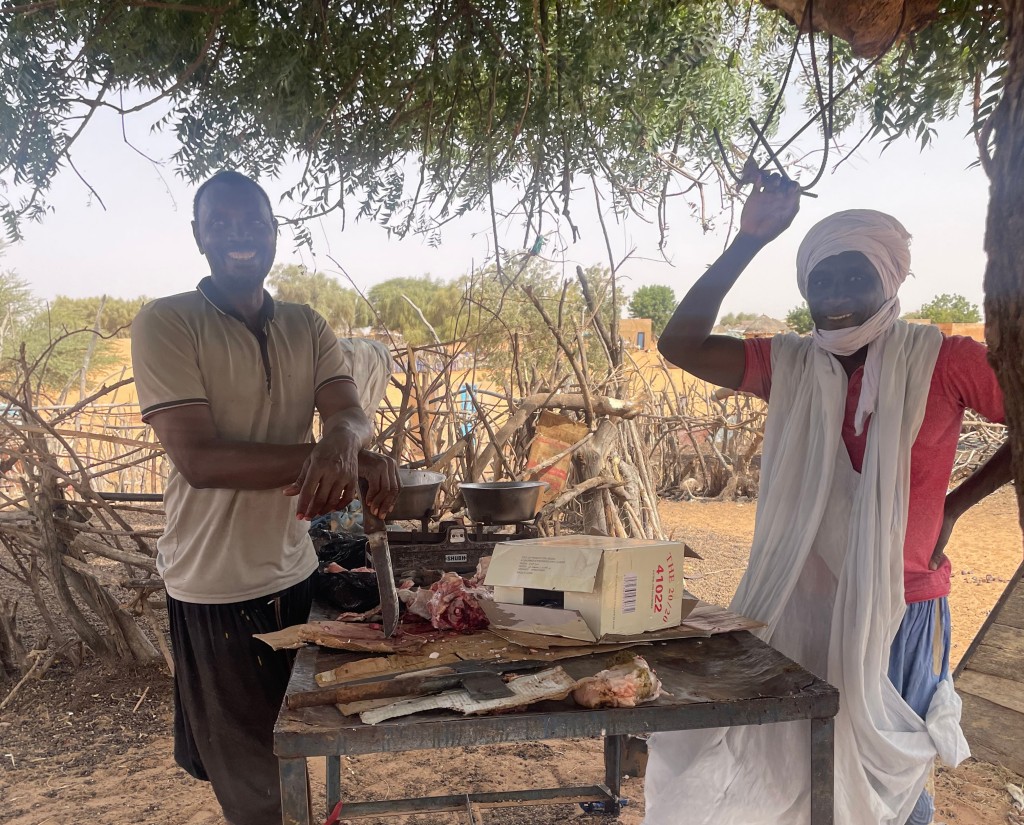
Five years post closure, the evaluation found that the project activities in Mauritania that generate direct, short-term benefits are the ones that continue to contribute the most to outcome sustainability. For villages visited, this largely took the form of various income generating activities (IGAs), which continued to operate five years post project-closure. A group discussion with community members revealed some of the project benefits. They noted, “They [IGAs] increase income, especially through the butcher’s shop and the community shop, which generate regular profits. In addition, they diversify revenue streams, thus avoiding dependence on a single activity and reducing economic risks. At the same time, they improve access to food: the butcher shop offers meat at affordable prices, and the shop makes it easier to buy basic necessities, reducing the need to travel long distances and limiting transport costs.”
Ownership and capacities of community members also played a key role in sustaining project outcomes. Building ownership was a particular focus of the project implementation. Where ownership was strong, strong community organization followed suit. In Kewalla, PARSACC worked to increase the protection of the vegetation cover in the village, through planting trees and hedges. During their visit, Margarita and Malal observed increased vegetation density and areas which remained protected from overgrazing through the fencing maintained by the villagers. A farmer and agro-pastoralist from Kewalla confirmed the active involvement of the entire community in monitoring and maintaining the vegetation, through a translated interview during the field visit.
“The village has a very active management and monitoring committee, responsible for maintaining and directly monitoring the pastoral reserves… The commitment to this initiative is collective and affects all levels of the community: even women and children participate by monitoring the fences to avoid any damage. The population is very dynamic and aware of the importance of preserving these spaces.
To ensure the sustainability of the work, we invest ourselves by contributing sums of money to rehabilitate the fences and maintain the protective infrastructure. This local organization and collective mobilization make it possible to guarantee effective monitoring and to strengthen the protection of the vegetation cover in the long term.”
Significantly, the ex-post evaluation report found that ownership of activities was particularly strong when led by women’s cooperatives. This stood out to stakeholders as something to leverage in the design of future projects. During the field visit, the team learned about the commitment of women’s groups in sustaining the IGAs, such as creating innovative ways to protect and maintain market gardening crops from increasingly harsh conditions and spending several hours each week in the practice of IGAs.
Planning for (not so) rainy days
While the list of sustained outcomes five years on was a happy find, one notable absence from this list was additional planning activities for climate change adaptation among the visited communities. During the project, hundreds of technical staff and thousands of community representatives received capacity building in planning for climate change adaptation. Despite this, since the project’s closure no further planning activities have taken place. This could in part be related to the project’s sustainability plan dependent upon a phase two of the project, which ultimately never took place. Interviews revealed that a lack of resources and institutional motivation to maintain these activities means that today DREDDS are not playing a meaningful role in sustaining project outcomes.
Beyond the absence of additional CCA plans, the lack of continued institutional support for PARSACC outcomes has had further knock on effects. Margarita and Malal found damage to crucial infrastructure, in particular water access infrastructure, which was often beyond financial capacities of communities to repair. The support of DREDDs in most of these cases could have made a difference in maintenance and repair of the infrastructure, possibly enabling the IGAs to continue.
Building resilience and adaptative capacity in Mauritania and beyond
A final, but central, question asked in the report is what does this all mean in the grand scheme of things? In other words, how are stabilized dunes, increased vegetation, women’s cooperatives, and increased incomes helping the system as a whole be more resilient and adaptive to climate change?
Margarita and Malal found the project contributed significantly to restoring and maintaining the resilience of local ecosystems through the concrete measures chosen and implemented by the communities during the CCA planning, such as dune stabilization and increased vegetation coverage. They found the IGAs contributed to additional sources of revenue and food for communities and greater opportunities for the most vulnerable groups, including the involvement of women in traditionally male-dominated economic activities.
Looking back at PARSACC, visiting project sites, and speaking to beneficiaries years after project closure has yielded several key lessons for future CCA projects. Project designers and implementers should prioritize robust sustainability plans to ensure enduring outcomes. As part of these plans, Executing Entities (often national government departments) should establish clear roles and responsibilities for decentralized institutions and identify resources for long-term sustainability. Although not a guarantee of success, the PARSACC project also demonstrated how implementing income-generating activities through local women’s organizations can lead to stronger ownership and sustainability. Tangible and intangible benefits often reinforce their resourcefulness and initiative, increasing the likelihood that outcomes will be maintained over time. Overall, it is important to recognize both what is within project control (e.g., sustainability planning) and what is outside of project control (e.g., additional funding), and the importance of sufficient overall resource availability for impactful CCA actions.
For funders, the report recommends a focus on demonstrating practical benefits to foster ownership among community members. Indeed, in project sites visited Margarita and Malal observed how much more communities did to maintain measures and see real benefits. Increased vegetation areas, which interviewees saw as providing livestock fodder and protecting the village from wind erosion, led to higher levels of ongoing maintenance activities than measures such as dune stabilization.
More specifically for Mauritania, this ex post evaluation has shown how critical it is to secure water access when designing CCA interventions in arid regions like that covered in PARSACC. The sustainability of the project’s outcomes five years on, despite the lack of a sustainability plan, is a positive finding. But many of the sustained outcomes are still vulnerable to climate change, in particular droughts, which means coming back in another five years may tell a different story unless more is done to further adapt to climate change.
This blog is based on the “Ex-post Evaluation of AF/WFP Project: Enhancing Resilience of Communities to The Adverse Effects of Climate Change on Food Security in Mauritania” submitted to the Adaptation Fund Board in February 2026.
About AF-TERG
The AF-TERG is comprised of an independent evaluation advisory group of experts that report to the Adaptation Fund Board and are responsible for the independent implementation of the Fund’s evaluation policy. It works to improve the quality and effectiveness of the Fund’s work through evaluations. Ex post evaluations of AF-funded projects are commissioned by AF-TERG. The ex post evaluation in Mauritania was implemented by Baastel using the AF-TERG methodology for ex post evaluation of adaptation interventions.