



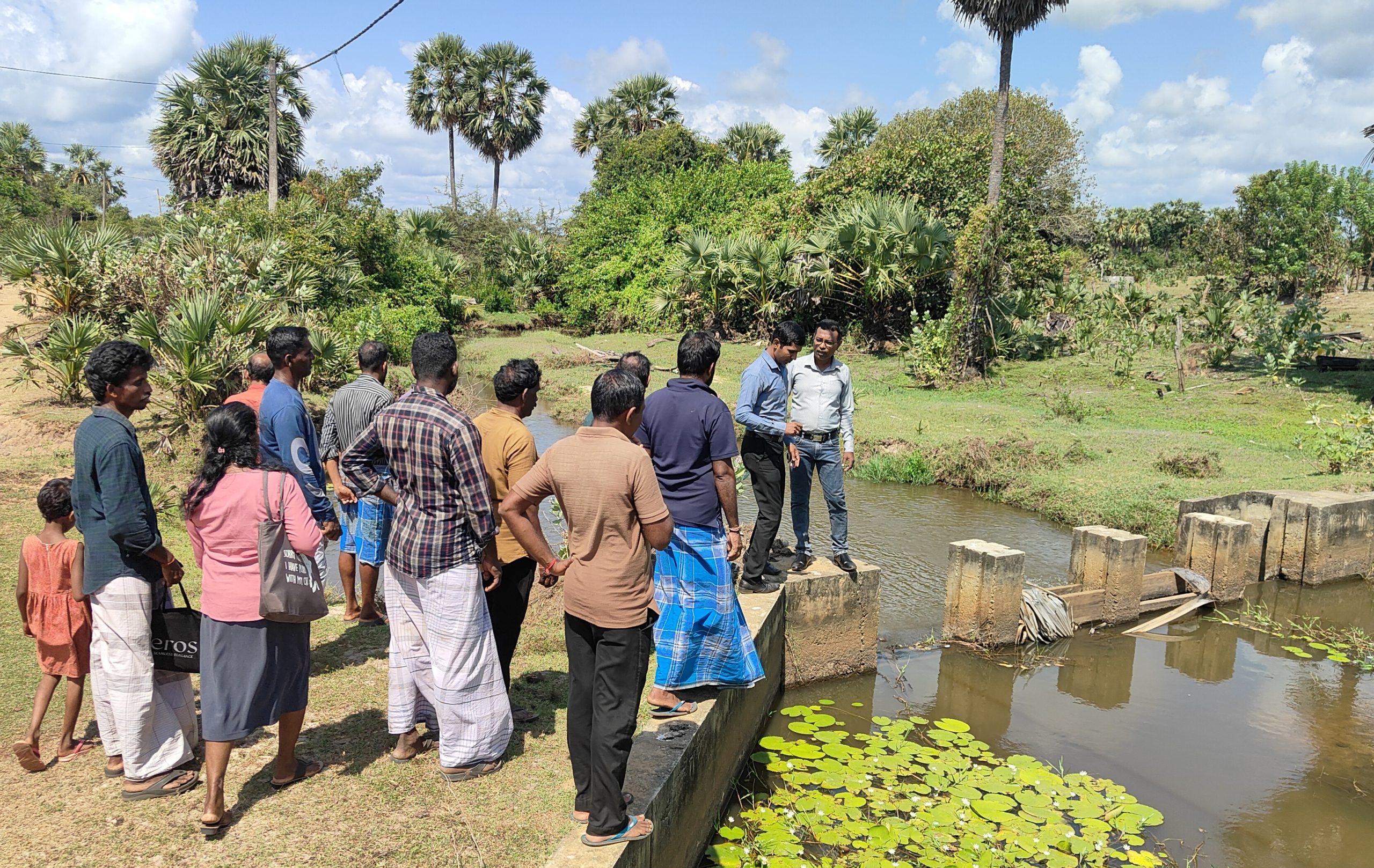
Farming communities in Mullaitivu District are facing increasing challenges to access water for their agricultural livelihoods due to erratic rainfall, flooding, prolonged dry spells, and saltwater intrusion. The rehabilitation of minor irrigation infrastructure has been identified as vital to directly address both water insecurity as well as climate change risks in the district.
UN-Habitat in partnership with the Ministry of Environment, Mullaitivu District Secretariat, Department of Agrarian Development and Community-Based Organizations (CBOs), is improving 16 minor irrigation infrastructure systems through the project “Build resilience to climate change and climate variability of vulnerable communities in Mullaitivu District of Sri Lanka”. Funded by the Adaptation Fund, these interventions aim to strengthen water security and agricultural productivity of 1,490 farmers, including 224 female farmers.
Discussing the many challenges faced by farmers, Mr. K. Mahalingam, President of the Mulliyawalai Centre Farmer Organization in Mulliyawalai said, “Agriculture is our livelihood. In recent years, we have faced many difficulties due to water shortages and damaged irrigation tanks. We hope that the rehabilitation of minor irrigation tanks will help us cultivate our lands properly.”
To officially commence the interventions, seven work initiation meetings were conducted by UN-Habitat at Agrarian Service Centres across Mullaitivu District in early March. Rehabilitation work was formally initiated, and community monitoring teams were formed for each irrigation system during these meetings. The planned work includes the rehabilitation of seven irrigation tanks, four anicuts (small dams to regulate water flow), three irrigation channels, a downstream development and a saltwater protection bund, all designed to benefit the district’s farming communities.
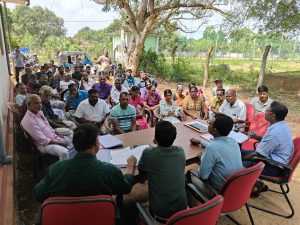
The newly formed Community Monitoring Teams, consisting of 74 members, including 21 women, will monitor construction progress of the infrastructure interventions, ensuring that all planned activities are completed and report any issues to the authorities. The Mullaitivu District Secretariat’s Project Management Unit will coordinate the implementation of this initiative, while officers from the Central Environmental Authority will ensure that environmental and social safeguards are maintained during construction, with UN-Habitat monitoring progress to ensure quality standards.
Mr. Anthonippillai Johnsitta, from the Department of Agrarian Development in Mullaitivu stated. “Improving irrigation tanks and constructing a saltwater protection bund in Mullaitivu District will enhance water storage, protect paddy lands from saline intrusion, and support sustainable paddy cultivation and food security. The active involvement of female farmers in this project will also play an important role in strengthening community resilience and agricultural development.”
By promoting climate-resilient livelihoods and enhancing adaptive capacity, this project supports communities in Mullaitivu District to better cope with climate impacts and reduce long-term vulnerability.