

Ex post Evaluations


Ex post evaluations are conducted by AF-TERG three to five years after closure of selected Fund-financed projects. They are designed to answer three key questions:
- Have the project outcomes been sustained since completion?
- Which factors have contributed to sustain the project’s adaptation outcomes over time?
- How do the sustained outcome characteristics contribute to the system’s resilience?
Given the relative novelty of climate change adaptation portfolios and the limited body of work on ex post evaluation for adaptation, the framework we developed and use for these evaluations is an innovative and Fund-specific method that aims to contribute to wide learning in the climate change adaptation space. The process involves reviewing project documentation, co-creating the evaluation focus and selecting the project outcomes for the assessment, stakeholder consultations, field visits for data collection, data analysis, and report writing.
These evaluations are useful entry points to support longitudinal learning, assess the Fund’s contribution to the wider climate change adaptation community, and to assess and track the Fund’s contribution to the Global Goal on Adaptation. Insights gained from these evaluations are also intended to inform continuous improvements within the Fund’s Monitoring, Evaluation, and Learning (MEL) processes.
Learn more about conducting ex post evaluations below:
All ex post evaluations
Ghana(2025) (Ongoing)
Evaluation Subject: All project outcomes.
Access the inception report (forthcoming)
Access the ToR here.
Cuba (2025) (Ongoing)
Project: Reduction of Vulnerability to Coastal Flooding through Ecosystem-based Adaptation in the South of Artemisa and Mayabeque
Provinces
Evaluation Subject: All project outcomes.
Access the inception report (forthcoming)
Access the ToR here.
Eritrea (2024) (Ongoing)
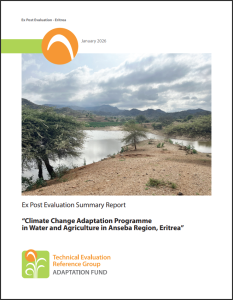
Project: Climate Change Adaptation Programme In Water and Agriculture In Anseba Region, Eritrea
Evaluation Subject: All project outcomes.
Project Summary: The Climate Change Adaptation Programme in Water and Agriculture in Anseba Region, Eritrea was a US$ 6.52 million project carried out with Adaptation Fund support in the sub-Zobas of Habero and Hamelmalo, between 2012 and 2018. It was implemented by the United Nations Development Programme (UNDP), with the Ministry of Land, Water, and Environment (MoLWE) of Eritrea as the national executing entity and the Zoba Anseba Administration’s Department of Agriculture and Land as the on-ground implementor. At the national level, the project responded to critical challenges of climate change vulnerability, low adaptative capacity, and high levels of food insecurity and malnutrition.
Access the full evaluation report here.
Access the summary report here.
Access the inception report here.
Access the ToR here.
Mauritania (2024) (Ongoing)
Evaluation Subject: All project outcomes
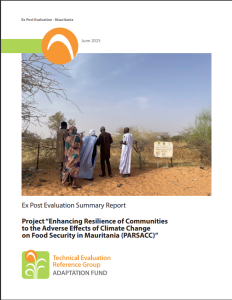
Project Summary: The PARSACC project was funded by a USD 7.8 million grant from the Adaptation Fund. It was implemented by the World Food Programme (WFP) in collaboration with the Ministry of Environment and Sustainable Development (MEDD) of Mauritania, which served as the project’s executing entity. It aimed to enhance the resilience of vulnerable communities to the effects of climate change on food security. PARSACC was designed in response to Mauritania’s arid climate and the impacts of climate change, which are driving desertification through increasing temperatures, decreasing rainfall and increasing risk of drought – all factors that adversely affect food production. The project targeted communities living in eight wilayas, or regions, with livelihoods that were predominantly dependent on subsistence farming and livestock and highly sensitive to climatic variability
Access the full evaluation report here.
Access the summary report here.
Access the inception report here.
Access the ToR here.
Northeast of Argentina (2023)
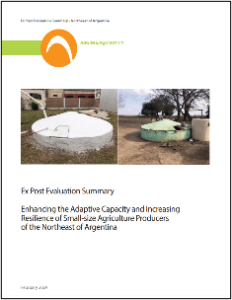
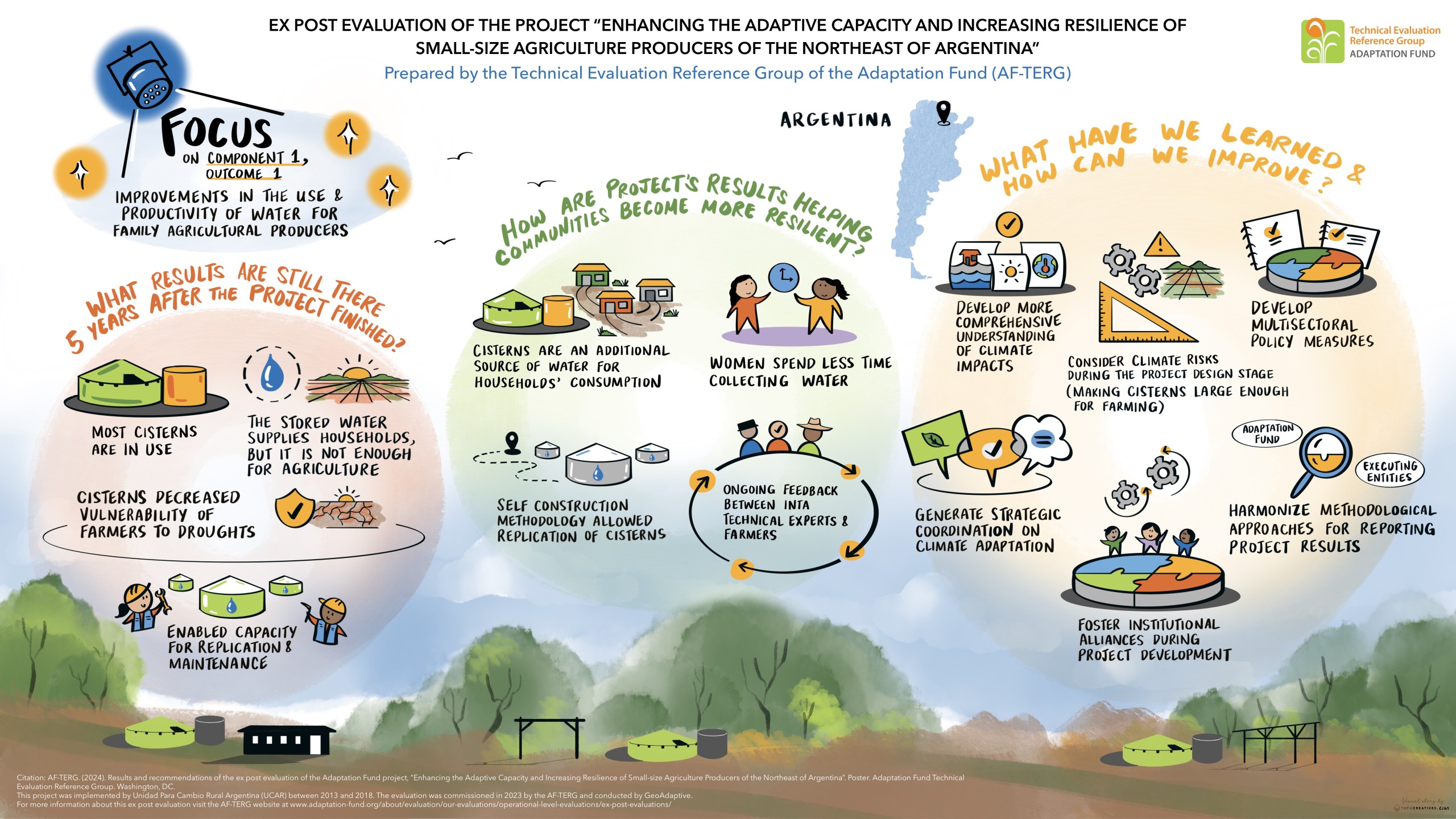
Evaluation subject: Project Outcome 1: Improvements in the use and productivity of water for family agricultural producers
Summary: Assets and capacities were sustained among households. Overall, the observed cisterns were functioning correctly, although those at schools had significant maintenance issues. Notably, the application of the self-construction methodology allowed for the replication of cisterns across the region using funding from different sources and programs.
The cisterns have withstood several climate disturbances over the years. While they have had positive impacts, their contribution to ensuring sufficient water access for both human and animal consumption, as well as agricultural productivity, remains limited. This is primarily due to their capacity, which is focused on meeting household needs and has only partially supported agricultural production, falling short of the project’s original intent.
Access the full evaluation report here.
Access the summary report here.
Access the ToR here.
Ex post evaluation – Argentina (Southwest of the Buenos Aires Province) (2023)
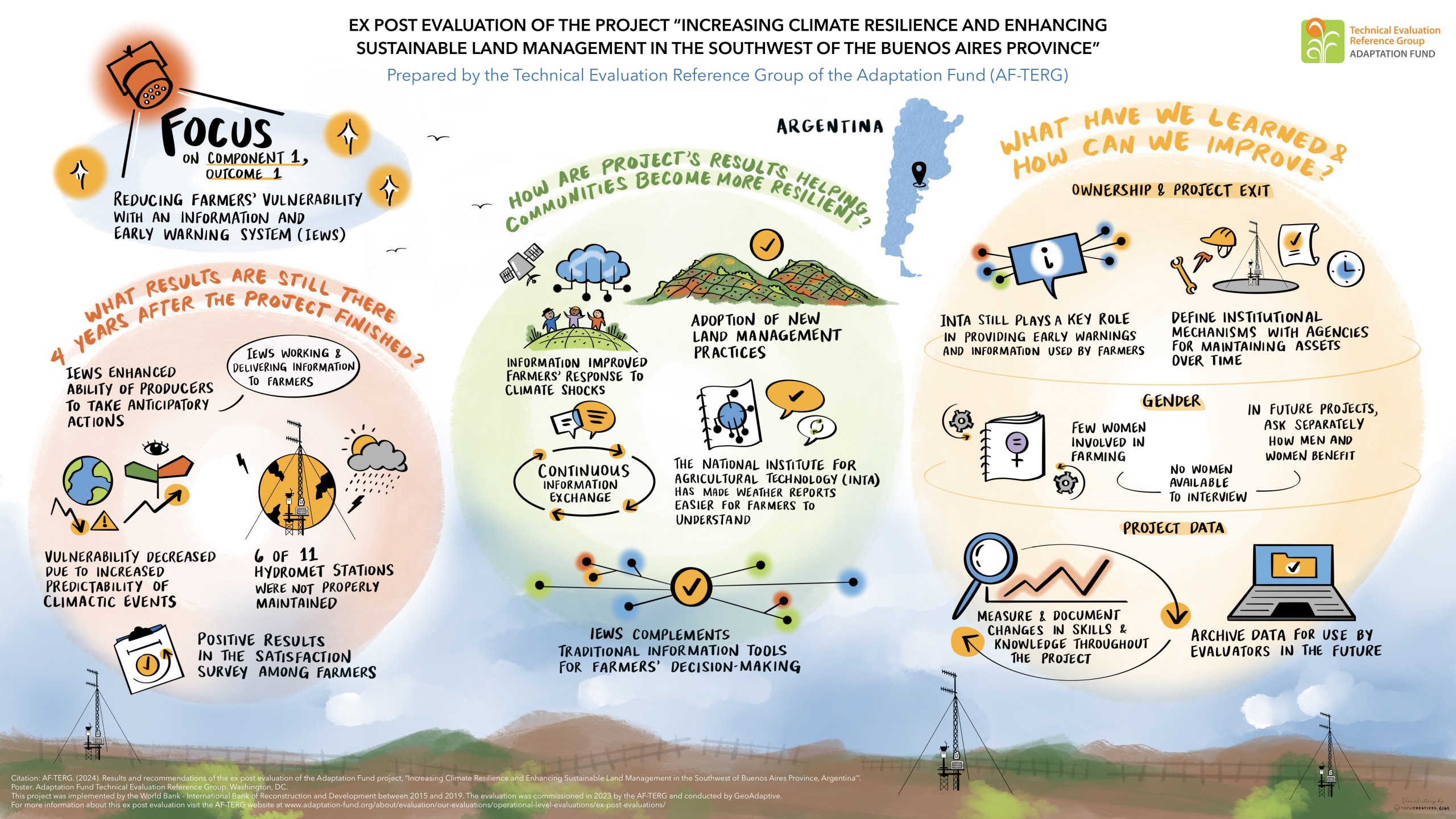
Evaluation subject: Project Outcome 1: Contribute to reducing climate vulnerability of the agroecosystems in the Southwest of the Recipient’s Buenos Aires Province
Summary: Sustainability of project assets was limited, because six out of eleven hydrometeorological stations were not transmitting data and were not properly maintained. This was due to the absence of dedicated budgetary resources and clear responsibilities. While missing data from six stations resulted in a less dense input network, the remaining stations provided sufficient detail to inform adaptive planting decisions.
The Information and Early Warning System (IEWS) enhanced the producers’ ability to take anticipatory actions, reducing their vulnerability through better climatic predictability and the adoption of INTA recommendations. However, the system’s impact on reducing vulnerability could not be quantified, as agricultural production data was not measured.
Access the full evaluation report here.
Access the summary report here
Access the ToR here.
Ex post evaluation – Ecuador (2022)
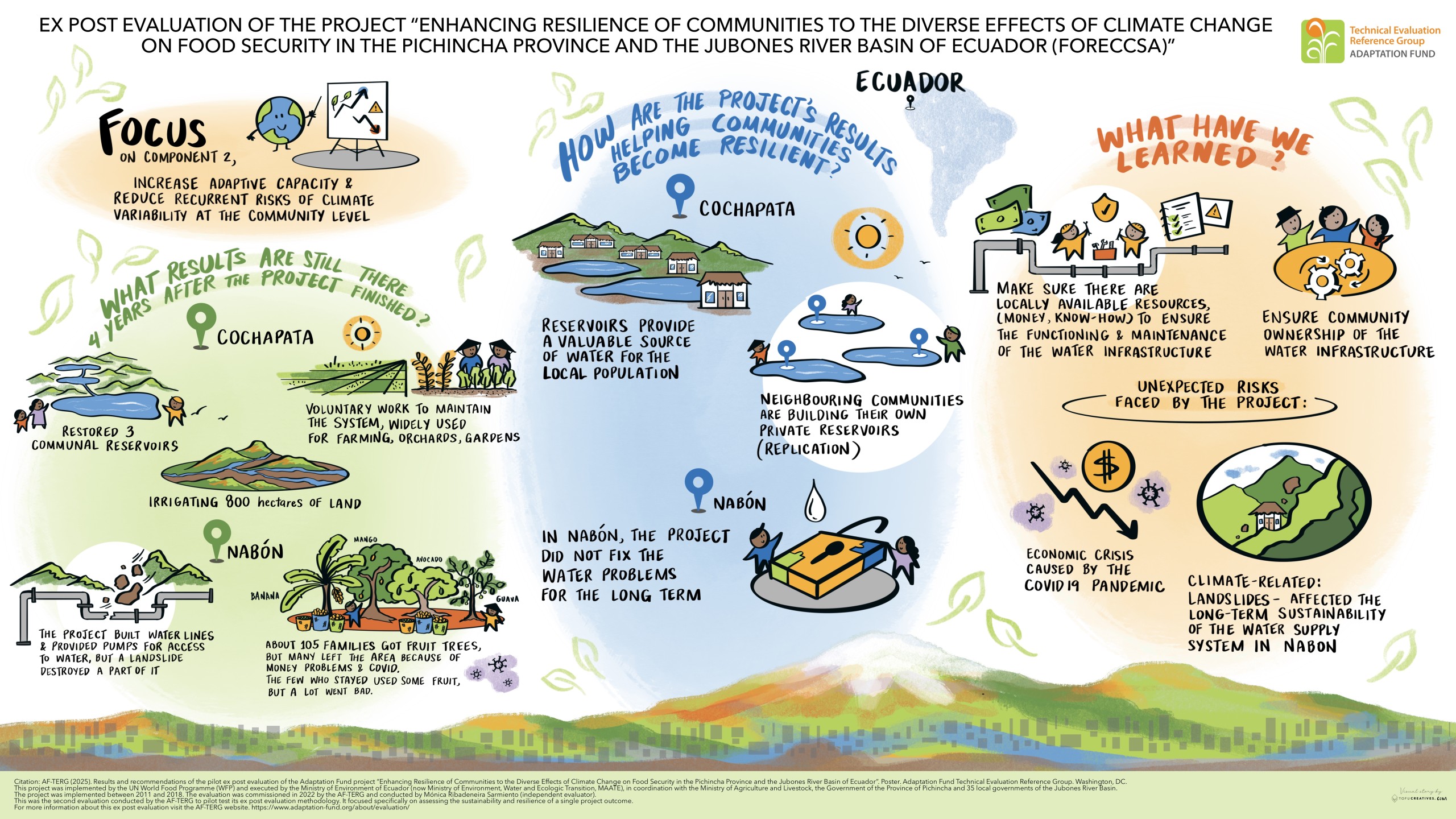
Evaluation subject: Component 2 – Increase adaptive capacity and reduce recurrent risks of climate variability at the community level
The fieldwork showed that sustainability of outcomes after project completion was only moderate. This result was driven by partial ownership of assets depending on the site, few resources for partnerships, and a limited impact on “decreased vulnerability.” Results differed significantly between sites. Assets in Cochapata were relevant and well maintained by the community, but those in Nabón were partially unusable or abandoned.
The resilience analysis tool indicates weaker prospects for climate resilience. The resilience characteristics exhibited by the assets did not seem to influence food security in both sites or were not enough to prevent outmigration from one site. The overall strategy of the outcomes was to maintain systems (and their structures and functions) for water management and food security. Thus, the resilience of investments can be classified as active and passive resistance.
Access the full summary report here.
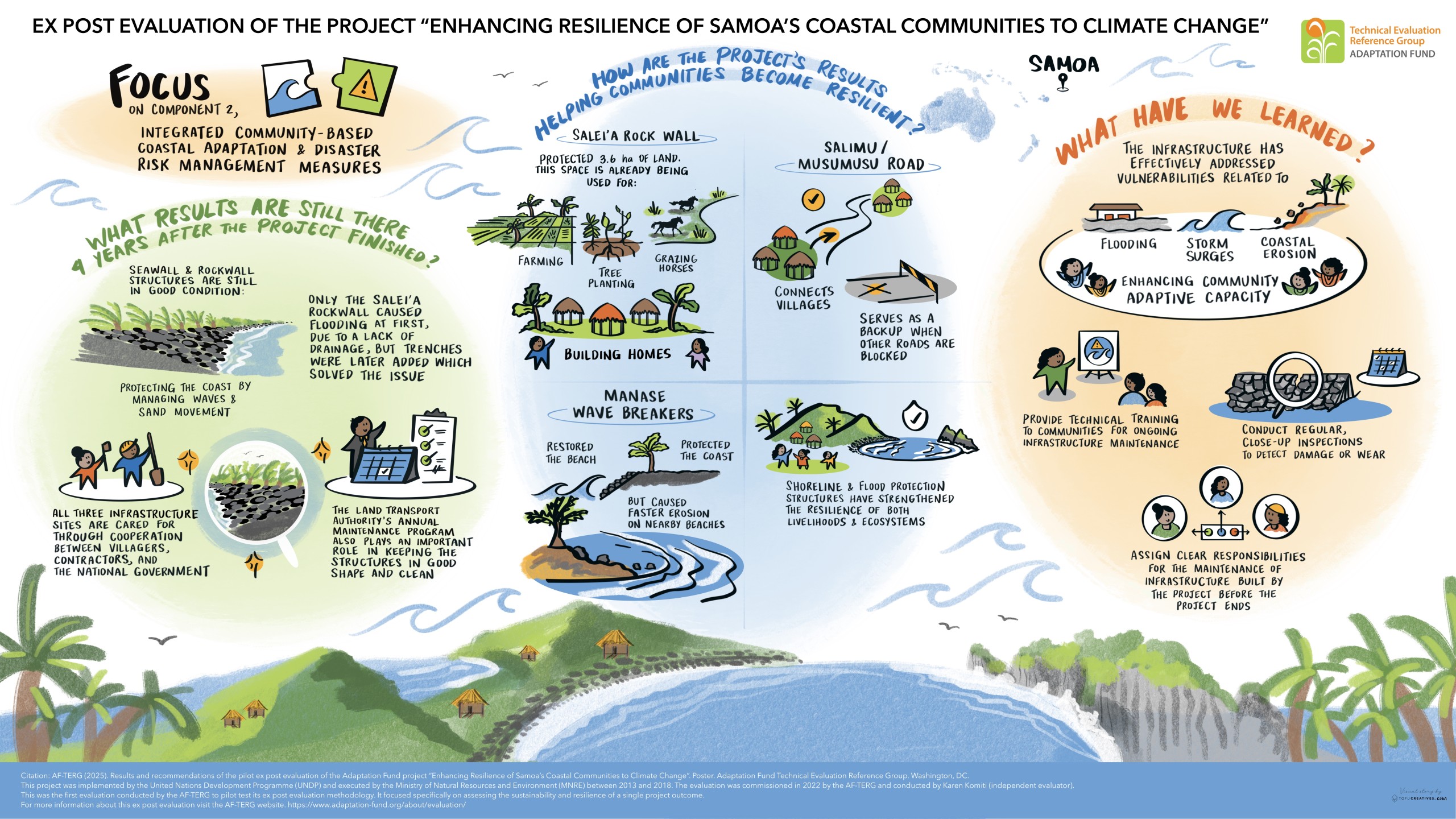
Ex post evaluation – Samoa (2022)
Project: Enhancing Resilience of Samoa’s Coastal Communities to Climate Change
Evaluation subject: Component 2 – Integrated community based coastal adaptation and disaster risk management measures
Summary: Five years after construction, the structures across four sites/six villages remain physically intact but some sections of Manase and Salimu / Musumusu rockwalls appear to be deteriorating. In general, the structures are adequately and routinely maintained by stakeholders at household, village, and government levels. These activities have not diminished in the years since project closure, despite the absence of secure funding in government operational budget, an infrastructure-specific risk management plan, and co-financing to enable maintenance beyond closure.
As far as the resistance-resilience-transformation typology, all seven structures exhibit various levels of resilience (mainly passive resistance and some resilience). All have remained standing in the face of several climate disturbance impacts in the intervening years.
Access the full summary report here.
Access the visual summary here.